Behind The Seams With Nat Della Selva
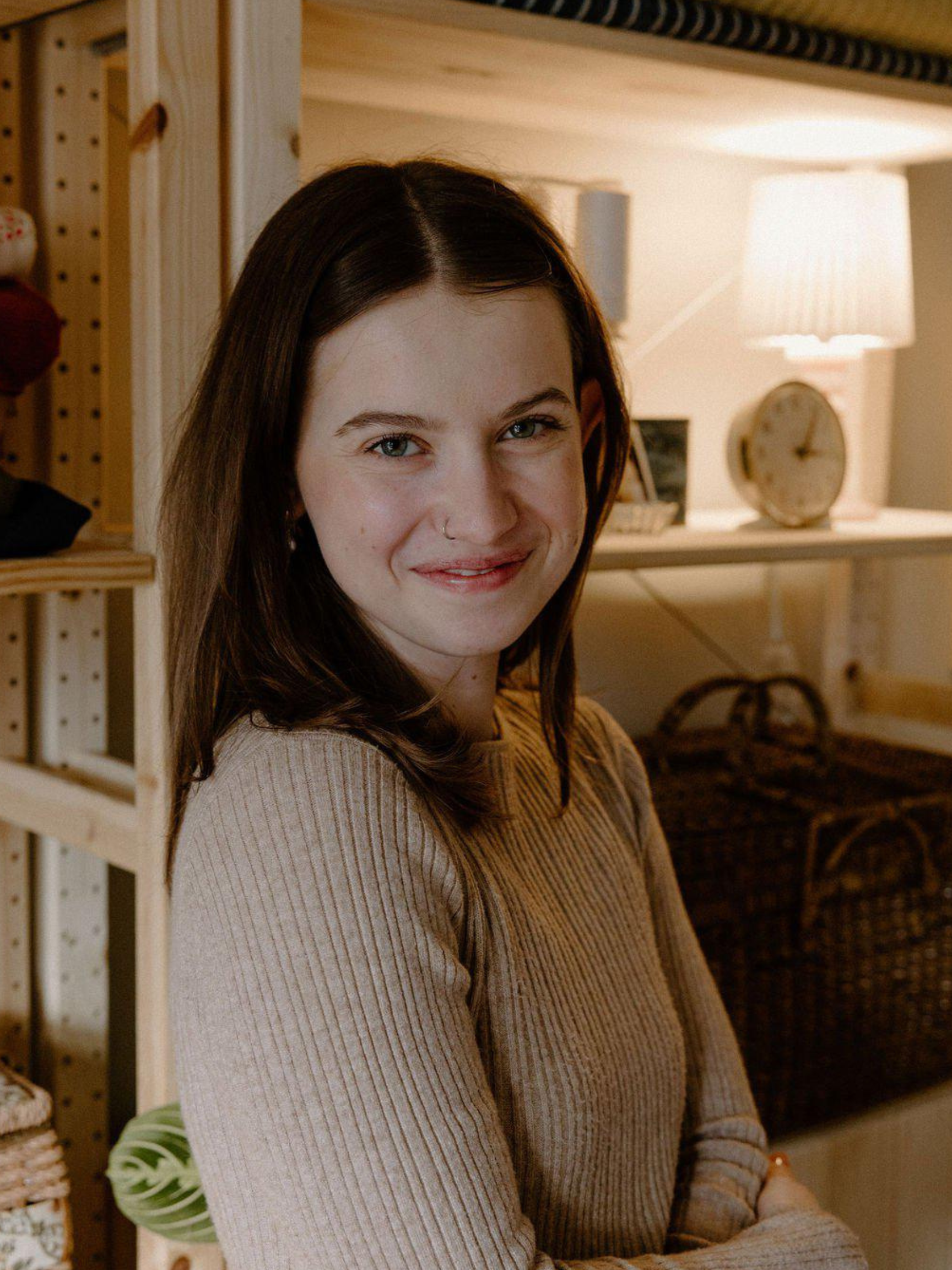
This month, we’re so excited to feature CPMG co-teacher, Nat Della Selva! We hope you enjoy this exclusive interview.
Q: Welcome Nat! Thank you so much for being here. Can you introduce yourself and tell me a bit about yourself?
N: My name is Nat. My full name is Natalie Della Selva., but I just go by Nat. I've been Nat for quite some time. My friends always would call me Nat as my nickname.
In my senior year of high school, there were three Natalie's all in the same philosophy course, and I'm just someone who wants to be uniquely me, so I was like, I can't be one of three Natalie's. So I just decided to go by Nat and then from then on I've been Nat.
But yeah, a little bit about myself; I am a cat mom. I have two lovely kitties named Elvin and Torta. I’m a fiance and I live in Columbus, Ohio. I came here for school and I just decided to stay and I love it here. I feel like Columbus is one of the best places to be in America as an artist because it's one of the cheapest places to live city-wise.
It's also very up and coming for the arts, so there's a lot of art festivals and just things to do and places to display your art and be in community with other artists. So I love living here.
I'm also a pattern designer and sewing teacher. That's what I do for work.
J: Amazing. Thank you so much for sharing all that. It was great to hear a little bit more about you.
Q: Can you tell me a bit about your sewing and pattern making journey? How did you get started and why did you want to make patterns in the first place?
N: Yeah, so my family is full of creatives. My dad is a musician. He worked as a guitar gigging musician his whole life. my mom was actually in healthcare, but then during the recession, she got a job as a florist and has always just been a creative person. She was a knitter and was always doing creative things with us. She taught me to knit when I was in second grade.
She hosted an afterschool knitting club in my school and I loved it because I loved creative hobbies, but I was really impatient as most seven to eight year olds are. So I would, you know, get a little bit of the ways done and then I would make a mistake and she would fix it for me, and I was just like very frustrated by the process.
So when I found a sewing machine in our basement, I was like, wait a second. I can make things much quicker, and actually I can have a machine do this for me. So I started messing around with our sewing machine, and then I think it was that summer that my mom signed me up for a summer camp that was hosted by a nun in our neighborhood.
She had a sewing camp on her porch, and one of my best friends was taking the class as well. So we signed up together and sister Louise taught us how to sew. We made night gowns. And yeah, it was kind of iconic.
From that point on I was just like, okay,I'm obsessed with this. So I just kind of would like, make things up. I would rip apart some of my sister's clothes or my mom's clothes and try to make new things from them.
And then actually a crazy bit of lore here is that when I was, I think I was a freshman in high school, I signed up to be on Project Runway Junior. As part of that, you had to make a collection to audition. And so that was the first time that I had ever like actually made clothes “properly”.
I had always previously just been like kind of upcycling or DIYing and so I was like, okay, I'm gonna learn to make patterns. I'm gonna trace off things. So I was self drafting stuff and I made a little mini collection.
Me and my mom went to Los Angeles to audition for it, and I didn't make it through, but it was so fun and it was probably the first time that I was like, I actually like making clothes.
So yeah, from there I was decided that I was either gonna be a floral designer like my mom, or I'm gonna be a fashion designer. And I think just because I was kind of enthralled in sewing, I was like, okay, that's what I'm gonna do. I applied to a bunch of art and design colleges, and I got into all of them, but they were all too expensive.
I was going to go to the U of M, which is University of Minnesota. I'm from Minnesota originally. And then Columbus, the school here that I went to, Columbus College of Art and Design, they were like, oh, if you just need more money, we'll give you more money. And so then they decided to give me a larger scholarship. I had never been to Ohio before. I was like, I guess we're doing this! Because I was again, so set on going and being an artist and like going to art school. So my parents drove me out here and then I’ve stayed ever since then.
Eventually, I went to school for fashion design. I learned all about fashion design and thought I was gonna be a “designer”. I got an internship in technical design, spent the summer before my senior year in New York doing an internship. And you know, I thought my whole life I was going to be a designer. I trained in college to do this work, but I absolutely hated it.
I was like, really? I feel like this bubble of what a designer is like, was broken for me. Mm. And I just realized that this was just not the work I wanted to do. So from that point on, I had kind of started to learn more about indie pattern designers and I was starting to follow people on social media who were using patterns from indie pattern designers.
Because again, up to this point I'd never really used any pattern except for a commercial pattern. I sewed that nightgown, which was a commercial pattern, but till that point I had been self drafting or drafting in college.
And so I hadn't really heard about indie designers or known anything about it. Merchant and Mills was the first pattern I ever used. I made the Mary White top and I remember piecing it together.
After printing it out on my parents' home printer, I think it was a summer between school or something, and I was like, how is this gonna work? Is it actually gonna print out and become a pattern? And yeah, I just was like really inspired by all the people I was seeing who were doing this work.
And then, I started following Helen from Helen’s Closet and her journey. I was like listening to the Love to Sew Podcast and just like hearing about it from the very beginning, like how she was becoming an Indie Pattern Designer and I was like, this is so incredible. This is what I wanna do.
So from that point I just kind of started to try to figure out how I would make that work and how I could train to do that. Because again, up to this point I'd been in school learning kind of this commercial route, like how to be a designer in the fashion industry, in the like commercial side of fashion, and it's quite different, I would say.
So in my senior year of college in one of the classes we had what was called “Portfolio” and it was an opportunity to kind of understand what job you wanted to work in the fashion industry and how you would get a job doing that.
So part of that was doing informational interviews and talking to people who were in roles that you were interested in doing. So I reached out to Lydia from Lydia Naomi Patterns because I had been watching her YouTube for a while and I was like, “Hey, would you be interested in doing the informational interview? I really wanna be a indie pattern designer, but I don't know where to start.”
She was so kindly took time out of her day to chat with me and talk me through her journey and how she became an indie pattern designer. So that kind of threw me down the path of like, okay, what are the skills I don't have yet? I know how to pattern draft. I know how to use Adobe Illustrator. I know the general idea of how to write instructions, but the one thing that I did not know was how to grade. There was no training on that at all in my schooling. It was all about how to make made to measure patterns.
So I just had no idea how to do this and it just felt this very confusing out of reach thing for me. So I started looking at our library, looking at different books. I started to see if there were YouTube videos for it, like trying to like piece it together. I watched a bunch of videos, read a bunch of books, and I just felt like again, it was just so still out of reach.
Then I came across Victoria’s course, again through an internet rabbit hole. And yeah, she was doing a live with Ruby Gertz from Slow Fashion Academy, on basically like how to do inclusive grading. I was like, that's exactly what I need! And so they were talking about it, but it still was kind of general terms and I was like, okay, I hear what you're saying. I'm starting to grasp the idea, but like, how do I actually do this?
So Victoria was sharing about her course, and I think at that time it was the first cohort and then, when I had graduated it was the second cohort.
It was kind of a crazy decision honestly, because at the time I had just graduated and I had a good amount of debt. I was like, “am I going to spend more money on education after just like completing this?” But I had some time on my hands, and so I was like, I feel like now is a good time for this. So I jumped in doing that and the rest is history.
But I guess, let me make sure I've answered your question, which was, why did I wanna make patterns? I think generally speaking,I love clothes. There's also something about my brain that is obsessed with seeing something, whether it's clothes, a bag, a notebook, a pair of shoes, anything that I see and I'm like, I need to make that.
I don't know what it is in my brain that feels that need. I need to understand how it's made and the solution is a pattern. So it's just like the avenue to make the thing that I wanna make, I guess.
J: So cool. Thank you so much for sharing all that. I feel like your journey is exactly what you said: It's so iconic. Like you were taught how to sew by a nun, Sister Louise, and your knitting journey started from your mom. That's so lovely, and you also applied for Project Runway. That's super cool. But yeah, it's amazing to hear all the backstory. I really appreciate you sharing that with me.
N: Yeah. I appreciate you taking the time to listen. I feel like it was kind of a windy road.
J: It's perfect. I think everybody likes to hear all of the windiness of the road because it's relatable. It's like your unique journey, but other people have their own unique journeys and they can relate to you through that. So thank you.
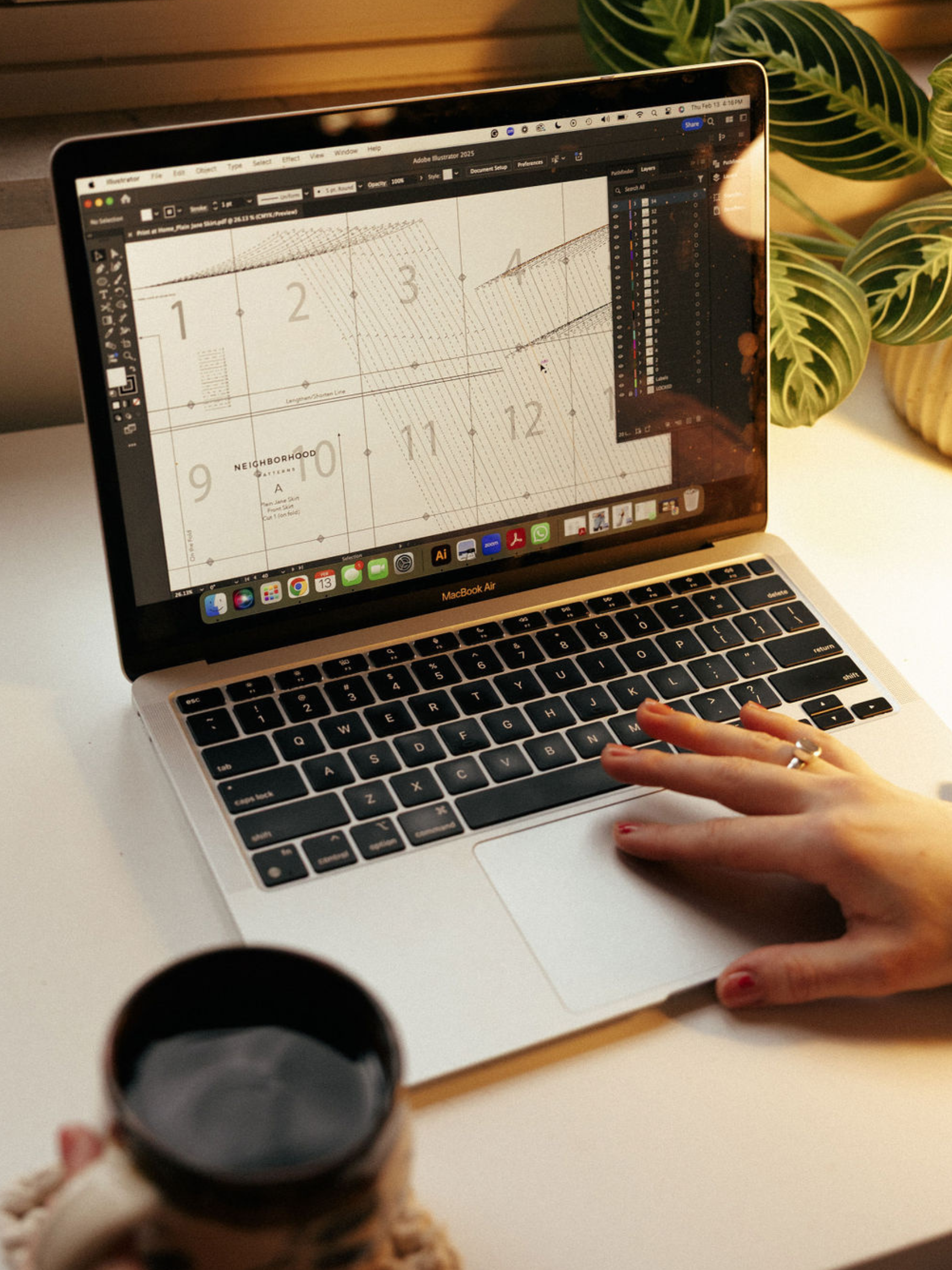
Q: Okay, so my next question: You have your own pattern making company. I also know that you teach in person classes, you do freelance pattern making, and you also co-teach at CPMG. That's a lot of moving parts and I'd love to hear how you balance it all.
N: Great question. I feel like this is maybe best said by first providing some context.
When I graduated college, I had done an internship in technical design. In the design realm of fashion, there's two sides. One is technical design and the other one is creative design. So the creative designers come up with the concept, and then the technical designers work hands-on with a factory to explain how that thing is made. So they're the ones who are coming up with the measurements, the grade rules. They're the ones who are essentially being the pattern makers.
That being said, nowadays, most pattern making is actually done in-house, in a factory. So that's all to say that, technical designers are essentially pattern makers, which is why I wanted to go with that route versus the creative route. So I had done my internship in technical design and even though I knew that's not what I wanted to do long term, I needed to make money.
I had been applying for jobs in technical design. I had a few interviews and none of them were panning out. I kind of just decided like, okay, this is just not working for me and I know this is not what I want to do long term. So instead I'm going to work a job that is flexible, that I can then start to build and work towards my goal of being an indie pattern designer.
So I was working as a nanny, which was the perfect job to be able to be flexible because kids take naps, and when they’re in a stroller I can be working while I'm working.
I just realized that like being an indie designer, while it's very possible to do that full time and make good money, I kind of was feeling realistic about it and realizing that, you know, as I begin this journey, it's probably not financially the best choice to just dive right in.
I didn't really have savings or anything that could back me up on that, and so what I decided to do was kind of take a multiple approach route.
So like I said, my full-time job was being a nanny, and then I started teaching on the weekends. So I had that going while I was learning to be an indie pattern designer, learning how to grade, all those kinds of things. From there it naturally continued.
Once I decided that I wanted to quit my full-time job, I still needed multiple sources of income to basically like sustain me, and that's why I've been doing this as well. I love to teach, I love sharing my joy of sewing with other people and like bringing them into that world.
So your question is like, how do I make that all work? I would say that it's not the ideal work/life balance, just because when you have more than one thing going on, it's hard to give your best time and energy to any one thing.
This year I feel like I'm finally in a place where I have enough financial freedom to be able to move away from one of those things and move more into the other.
I would say that I recommend to anyone who is going into this path of starting your own business or just working for yourself in general to have multiple sources of income because it helps you have a stronger base for yourself and so that you're not relying on just one thing to make it through.
Because, you know, some months you don't make as much from one thing or the other. So it just helps to balance it out.
So how do I balance it all? I mean, I think it's definitely a learning process for myself. I think that there's been times where the balance has not been the best, especially given that my fiance, he works a normal nine to five. He doesn't work weekends and he doesn't work evenings, which is where I often am working. In the past there's been times where it's like weeks where we don't see each other, which can work for a short period of time, but you know, for the long term it's really not the best. So I've started to, probably within the last year, I would say, create more balance for myself.
I only allow myself to work weekends for teaching purposes twice a month. As well as evenings, I try to only work two times… okay, I say two times but I'm literally working four times this week. I try to only work two evenings a week if possible.
My fiance is also in a band and so he practices on Thursdays, so I plan my classes to be on Thursdays, so that we can prioritize the time that we have together.
So yea, you know, it's a work in progress and I think like the most important thing I've realized for myself is just recognizing when things start to feel off and then be like, okay, why is this feeling off? How can I rebalance that?
Another example honestly is like, I've loved doing freelance work and I've been doing that for the past two and a half years, but I just realized that like long term for the success of my business and the success of myself and my career, that moving away from freelance and into my own patterns is the direction I want to go.
And again, I'm starting to have enough financial freedom to actually be able to make that decision, which feels really good.
J: That was super helpful. I think that it's probably something we, as people in the sewing pattern making space, probably don't talk about enough, or maybe just other people who are aspiring to do this, don't hear about the background enough of how we got to where we are and how we're continuing to get to where we wanna go.
I've had a very similar journey of really loving all of the pieces and parts that, you know, make the machine run. But at some point you kind of have to start deciding like, okay, is this what's right for me? Is it what I need right now for financial reasons? And then can I strip it away later?
And I found that for myself, it was really hard to start stripping away things because I actually liked all of the moving parts. Like you were saying you're starting to let go of some freelance work. When I came to that point of deciding, okay, I'm done with freelance work, it was really hard for me.
It was such an emotional decision because I actually love doing that and I love helping other people, especially in the sewing and pattern making space. Anyways, all of that to say that I appreciate you sharing and I think that it's something that we should talk about more.
N: Yeah, and I think that, um, a couple different things. One is that I feel like there's sometimes a lot of shame when it comes to talking about money. Like, I even remember when I was working full-time as a nanny, like, you know, this was a good job. I had benefits. I had solid hours I could count on.
And yet, whenever someone would ask me like, oh, what do you do for work? I would always say, well, I'm a nanny right now, but I'm working towards this. I didn't want people to think, oh, I'm only a nanny. Like that felt really embarrassing.
There’s truly nothing embarrassing about it. Working to your full capacity, you know, whatever that was. Whether it's like you work at McDonald's, you work as a garbage man. There's nothing shameful about that.
The other thing I was gonna say is that I feel like what's hard for me and continues to be hard for me is that when it comes to freelance work, this is money that I can bill by the hour. Like as I'm working, I know exactly how much I'm making. It feels really stable and I can end the day knowing, oh, I've made $500, or whatever the amount is. But if I'm working for myself, it's just so fluid and I feel a lot of like, oh, what did I even do today? Like, did that make money? It's just so less measurable and so it can feel like I don't know if this is actually worth my time or my energy.
J: Yea, I totally understand. I think in the same vein, that's probably why it's so hard for us to stop work at the end of the day or when we've decided it is the end of our work time. Because you aren't measuring like, oh, I'm going to my job, I'm getting a salary, and then after working eight hours today I'm gonna go home and I'm gonna get the same paycheck.
For us it's like the more we work, potentially the more income we can make. And especially during times where income might be lower for one month for whatever reason, you feel this constant need or even just want to work more and more and more.
So I think that it's really important what you were talking about earlier, like giving yourself your own constraints. And it's okay that sometimes we don't always follow through on those constraints. Like yes, we might say we're gonna work only two nights a week, but then we work four.
But that's okay because that's a decision that we chose to make. But it's helpful to have these mindful boundaries for ourselves.
Q: Thank you for sharing all that. So of all of the pattern making related work that you do, do you have a favorite type of work?
N: Hmm, that's a good question. I mean, I love teaching. I really do. I think that especially because I primarily work from home when I get to teach in person classes, I get this reminder of what it means to feel joyful about sewing and like be in community with people, which I feel is just like at the center of my values and of my brand.
I like this practice of seeing all of that together. I just feel so aligned with what my goals are, bringing more people into sewing, sharing the joy of sewing, and seeing that spark when someone creates something that they never thought they ever could.
It's just so, so incredible and also to be part of that journey for them, reducing friction, because I think that's a big thing for sewing is like, so, so much of the time I feel like people, when they're first getting started, or even if they've been sewing for a long time, they can feel really frustrated.
Like when they can't figure something out, it removes them from this joyful practice, and so when I teach, I get to see people on the edge of friction and then I’m like, oh, no, no, it's okay. You just do this. Or here, you know, maybe seam ripping feels like a lot right now.
I can take a turn seam ripping for you and you can go get a drink of water. And then they come back and they're like, oh, this is fun. This is supposed to be fun. Right? I often say in my classes, you have a built-in sewing sidekick. Like, I'm here. You don't have to be frustrated. I can just do this step for you. It's not that big of a deal.
So yeah, probably my classes just because I think that that's where I feel the most aligned.
I also think pattern making for myself creating patterns is also one of my favorite, parts of my job. But I just feel like I'm still practicing that. I'm not in my flow yet there, and so I can't say it’s quite yet my favorite.
J: Ah, amazing. I love it.
Q: So speaking of balancing work and passion, can you talk a little bit about working in your passion? Do you distinguish work, like pattern making and sewing related time from your fun pattern making sewing time? Or does it all kind of just mesh together?
N: Yeah. Okay. Great question. I think this year specifically, it's very mashed together and I am into it because the way that I had been working previously on patterns is very much how I learned in school, which is you sketch out all your design ideas, you do all the research, then you nail down the one. And then you work, work, work, work, work on that one thing, and then it becomes a pattern that you release.
But in so many ways, that's so separate from my own projects because my own projects, you know, I'm not doing a lot of research. I'm not, you know, focusing in on that one thing. I'm just making a shirt or making a dress or whatever. It's like very one off kind of thing, whether it's my own pattern or someone else's pattern that I'm using. But what I've realized is that this process of such focused time and energy really does not work well for my brain because I feel like I'm a perfectionist.
I'm also an overthinker and so having only one thing to think about creates a lot of space for overthinking, and it creates a lot of space for perfection. And it results in that pattern taking a really long time, me coming up with too many options or variations or like, okay, well it can't be perfect until I have all of these things because I've given so much space for this one pattern.
And as I'm saying this, I'm thinking specifically about this dress pattern that I have. It's finished. Instructions are done. Yet my little brain is like perfection, perfection, perfection. It just won't allow me to see it through. So this year I've changed my way of working, which is that rather than focusing in, dialing in on one pattern, I'm allowing myself to just come up with lots of different patterns, kind of how I would in my own personal practice. Just trying lots of different patterns, you know, maybe liking it, maybe not, throwing that one away, not seeing it all the way through.
And instead, I’m giving myself all these different options to then pick from and play with. I think that it distracts my brain from perfectionism and it allows me to like play more. I think in general, creativity and perfection are often opposite from each other. Like, creativity is the way to soothe perfectionism.
So anyway, the framework I'm using is that I want to sew my dream wardrobe this year. And so I'm just coming up with lots of different patterns that feel like they could be in line with developing that. So this first quarter I'm working on lots of different patterns and then, you know, next quarter or even maybe the third quarter, I'm going to actually be picking from those patterns that I really have loved and then like dialing in and kind of working more. That's been really helpful for my own practice.
It's interesting because like answering your question, it actually does the opposite of what you're saying here. Like I mash everything together, which sometimes can feel kind of confusing and create some issues with work-life balance. But yeah, it's just felt more in line with my creativity.
J: Yeah, that's great to hear. And it's interesting to hear your perspective too because I think that we all like to work in different ways and as people who work for ourselves, we have to figure out what works best for us and for our brain and for our businesses. So it's lovely to hear all the behind the scenes.
N: Yeah. The other thing that I guess maybe answers this question more simply is that I'm also a knitter, but I don't make knitting patterns, so I've allowed myself to be really creative and have very personal creative time through knitting.
I usually try to knit every evening, sometimes a little bit in the morning. And that has been my dedicated personal creative time.
J: That's awesome. I wanted to do the same thing, but I'm not a proficient knitter, and so the learning curve makes it hard for me to wanna get into it because I know I'm gonna need to spend so much time to become good and I'm also a perfectionist, so I don't wanna make things that take time that aren't good and I'm already good at sewing.
N: Yea, and I think the challenge with knitting for a lot of people is that it is very time consuming. And just in general, I think we can agree that part of the reason why we sew is that you get a dopamine rush when you finish the thing, and with knitting, you don't really get that for a long time. It's very delayed.
You have to develop an enjoyment in actually practicing, which is really hard, and I still sometimes struggle with it, but I feel like it has taught me to be more in tune with creating and enjoying the creation process. Whether that's like, I really love the way my hands feel when I'm knitting or even like all I'm focusing on is just making this row better than the last row or whatever it is.
I also feel like knitting has taught me to be more patient. I don't know if that's the right word, but one part of knitting is that sometimes it doesn't go right and you have to frog it, which is like you have to take it apart.
And again, because you've spent so many hours, so much time on that thing to take it apart can feel heartbreaking. And I still sometimes feel that, but there's something about knitters that I've noticed that they're like, oh yeah, you just frog it. You just take it off and then put it back together.
And I'm like, how can you feel okay with that? But there’s this switch when you start to feel less precious about the thing, which is just really incredible.
J: I was talking to a friend who is a very proficient knitter and she was saying that rather than looking at it as the excitement is the finished thing, the excitement is actually the enjoyment of the entire process.
So if you're enjoying the entire process and then you have to redo the process, that means you get to do the process again, which I thought was a lovely perspective.
N: Yeah, and it is something that I think only comes with practice, with doing it a lot. And I would think that people who are more proficient at knitting probably feel less precious because they can do it quickly. Whereas if you spent so much time and it's the first time you've ever done it, to take it apart feels like illegal.
Q: Yes, exactly. Okay, so I’d love to hear more about freelance pattern making. How do you typically find work and what kind of projects do you work on?
N: When I first started doing freelance work, Victoria actually shared a freelance project with me that she had been working on for someone. It was like ongoing freelance work and she was ready to basically offload it to someone else.
So since I was looking for work, she shared it with me. I had been working pretty consistently for that company, but other freelance work that I've done is all word of mouth. I do both freelance pattern making, but also just like freelance projects of all sorts.
Finding a professional for freelance pattern making and sewing who is skilled in that work is hard to come by, so once you're known for that, people are gonna come find you for that. Locally, I've worked for someone who has a business creating athletic clothes.
He was looking for someone to basically be a technical designer for him. It was all just word of mouth. Previously, during the pandemic, I worked sewing upholstery, so I was known from the people that I worked with there that I sew and that I'm a patternmaker. Someone at that company told someone else and then he reached out to me.
I guess just the short answer would be word of mouth. I've also done a lot of because I work at a… oh this is also part of my job I didn't talk about! I also work once a week in a retail fabric store. That’s part of what's really cool about working there is that it puts me in contact with a lot of more people. So I'm well known in Columbus because I work for this fabric store that people are coming into and seeing my face and learning who I am.
Of all the people who work there, people know I'm the one who does pattern making, so they're gonna come to me if they have questions about pattern making or want, like a custom pattern of some sort.
So like I said, I’ve done consulting work. I’ve done technical design work. I’ve done freelance patternmaking for other companies. I’ve done one-off grading projects for other pattern companies. I’ve also done custom sewing, which is really not my favorite. Not because it’s time-consuming, but because it’s not my joy. I love sewing for myself, but usually the only time I’ll do custom sewing now is if it’s a gift.
During the holidays, we’ll get people who come in and say, “I have all these t-shirts from my dad who passed away, and I want to make a pillow out of them for my brother.” I’ll do a project like that. Or people who cross-stitch but don’t sew, often they’ll need a stocking made from their cross-stitch project. I’ll do one-off projects like that because it warms my heart. It’s not a big deal for me to do something like that, and I love being able to help.
The other thing I’ve learned through freelancing is that sometimes, with the custom sewing stuff I don’t really enjoy, I’ll quote them quite high. And if they say yes, I’m like, “Okay, great, that’s worth my time.” And if they say no, I’m like, “Perfect. I don’t want to do it anyway.”
J: It’s cool to hear that the scope of your freelance work is outside of just online, because in my mind, and in my own experience, most of my freelance work has been online.
N: Yeah, and it’s a big combination too. I just did a grading freelance project for someone. She found me through word of mouth, but it came from online connections. She reached out to someone else who was well-connected with patternmakers, and that person recommended me. So it was both, but she lives in the UK, so it was still more of a virtual connection.
Q: That’s awesome. So, every year you host something called Sew Small September. Can you explain what it is, and pull back the curtain on what goes into planning it?
N: Yeah. So Sew Small September originally came from my friend Madeline, who owns Madswick Studio. It’s is an Instagram challenge and giveaway. It’s a way to share more about small businesses within the fabric and indie pattern industry.
The reason she came up with it is that she’d been working really hard as an indie pattern designer, and she’d become friends with a lot of other indie designers. She’d been selling patterns for about a year or a year and a half and was finding it really hard for people to discover her. She was like, “I know I have a lot to offer. I know I have beautiful patterns, but I’m just not being discovered. I’m getting hidden in the algorithm.”
So she thought it would be really cool, because she knew she wasn’t the only one struggling with that, to put a spotlight on small patternmakers and small fabric shops.
We came up with this Instagram challenge as a way to highlight the little guys. And I was super down to do it, because I’m really passionate about building community and coming together in sewing. It felt aligned with my values.
We started it I think three years ago now? But essentially how the giveaway works is: we reach out to lots of small fabric shops and small indie designers and ask them to contribute a prize. Then people who enter the giveaway are put into a pool to receive prizes.
It’s a great way to build a following and recognition for all these companies. It’s like: we’re stronger when we’re all together.
And what goes into it is reaching out to all these people, organizing everything, creating posts and reels and content to share, and making sure people understand what’s required.
The way it works is: you need to sew with a pattern or fabric from a small company. It doesn’t have to be only the companies donating prizes, it can be any small company. It’s a really good opportunity to learn about companies you’ve never heard of before.
We create a blog post that lists all the different companies. It’s a lot of work, but it’s really fun. I love it.
J: I feel like it’s so aligned with what you want to be doing, so it’s perfect.
N: Yeah, exactly. The first two years I hosted it with Madeline. It was her original idea. Then this last year I hosted it with Bethany from Fluid Plus Drape, who also really believes in community. It felt really aligned, and she’s one of my good friends.
It’s also really fun for me because I mostly work from home by myself. Having one month of the year where I get to chat daily with a good sewing friend is just really fun.
And branching off of that, one of my goals (we’ll see if it happens this year) is I’d really like to host a sewing retreat, an in-person experience where people can come together. In some ways, Sew Small September feels like a smaller version of that: an online way for people to get together.
Q: Amazing. So when you’re planning patterns, do you strategize around a more complex pattern versus a simpler pattern, like giving yourself a break in between? Or is it all meshed together and you just follow your passion?
N: Yeah, there’s no strategy, Jess. Truthfully, I think the area I have the most room for growth is my own patterns. And I think it comes back to my overthinking and perfectionism.
I don’t feel like I’ve nailed what my workflow looks like in a way that works well for me when it comes to my own patterns. So no, not yet.
Q: Well, I feel like that leads perfectly into the next question. What challenges do you feel like you face as an indie designer?
N: I think there’s no roadmap, which is really challenging. It’s such a niche career, and I didn’t even know being an indie pattern designer was a career path until my senior year of college.
I knew I wanted to be a patternmaker, and I thought that meant technical designer. I didn’t realize this was an option. There aren’t a lot of examples or places where you can look and be like, “Okay, this is how you do that.”
And because we’re all working from home and on our own, it can feel very personal — not secretive intentionally, but personal. So for me, I’m still learning what workflow works well: how I want to plan launches, how I want to market, all of it.
Also, being an indie pattern designer isn’t just being a designer. You’re the patternmaker, the grader, the marketer, communications director. You have all the hats. It’s challenging to create a path for yourself.
And the way I’ve approached it from the beginning is that it’s only been a part of what I do. I’ve been a nanny, that’s how I made money, and I also make patterns. I freelance, and I also make patterns. There’s never been enough space where this is my one job, nine to five, to really nail it in. That’s been a downfall, but also a huge opportunity for growth.
Another big challenge is what’s required to be successful is to give it everything, to have it be your one thing. But how do you do that and also be financially stable from the beginning? That’s been the challenge for me up to this point. I haven’t had the financial stability to work that way. But the tides are changing a little bit, and I feel excited. My word of the year is growth.
J: Yeah, I hear you. It's always either time or resources. You can use your time and do all the moving pieces, or you can use money to outsource so two things can happen at once. But there’s also that feeling of, “But I have all the skills… why wouldn’t I do everything myself?”
N: Yeah, totally.
Q: Last question before a few rapid fire questions: What’s your favorite part of your job, and what’s the most difficult part?
N: My favorite part is that I get to work from home. That means I get to have warm kittens next to me all the time. It feels like such a blessing.
I loved working as a nanny. I loved the family, I loved the kids, but kids are snotty. They have weird liquids. They’re always sticky, and then you’re sticky. I just remember being like, “I just want to be home. I don’t want to be dirty anymore.” I want to take a hot shower, be in a warm blanket, have my cat next to me. It’s pure luxury. I feel so blessed for it every day.
The most difficult part… I think it’s that when I put work toward my own business, I can’t calculate how much I’m making. It’s non-measurable, and it can feel scary.
And I also have a hard time emotionally measuring it. I like to end the day and ask, “Was that a successful day?” And 75% of the time I’m like, “I don’t know. I’m not sure.” That’s probably the most challenging thing.
J: Okay. Are you ready for rapid fire?
N: I am so ready.
Q: What’s one thing you want all aspiring pattern designers to know?
I want them to know that your pattern should be a reflection of you and how you sew.
If you like to do your bias binding a specific way, tell us how you do that. If you like to clip seams in a way other people might not, say that in your patterns.
There’s pressure to figure out the “right way” to design patterns and write construction techniques like, “How do most people do it?” or “What’s the easiest way to explain this?” or “What will get the best reviews?” But most of the time, it comes down to preference.
And I want to know your preference. I want to step inside your studio and sew it like you sew it. I wish more people would lean into sharing their unique voice in their sewing patterns. When they do, they’re so much more loved as a designer.
Q: What’s your favorite online craft store?
Fluid Plus Drape. I’m not just saying that because I love Bethany, and I’m not just saying that because I have an affiliate link. I’m obsessed with her store.
She has the most unique prints on the internet, and they keep getting better. She works one-on-one with factories to create unique prints. She collaborates with other artists and has their prints on her fabric.
And because she’s a prolific sewist, she knows what good fabric is. She takes a lot of time choosing base fabrics. It’s always super high quality. I’m obsessed.
Q: What are you listening to or reading right now?
I’m continually listening to Crime Junkie. I’m obsessed with true crime. I used to be a scaredy cat and I still am sometimes, but I love how they tell stories. They don’t sensationalize them. They put time and energy into honoring the victim. I’m obsessed. It’s what I listen to 24/7.
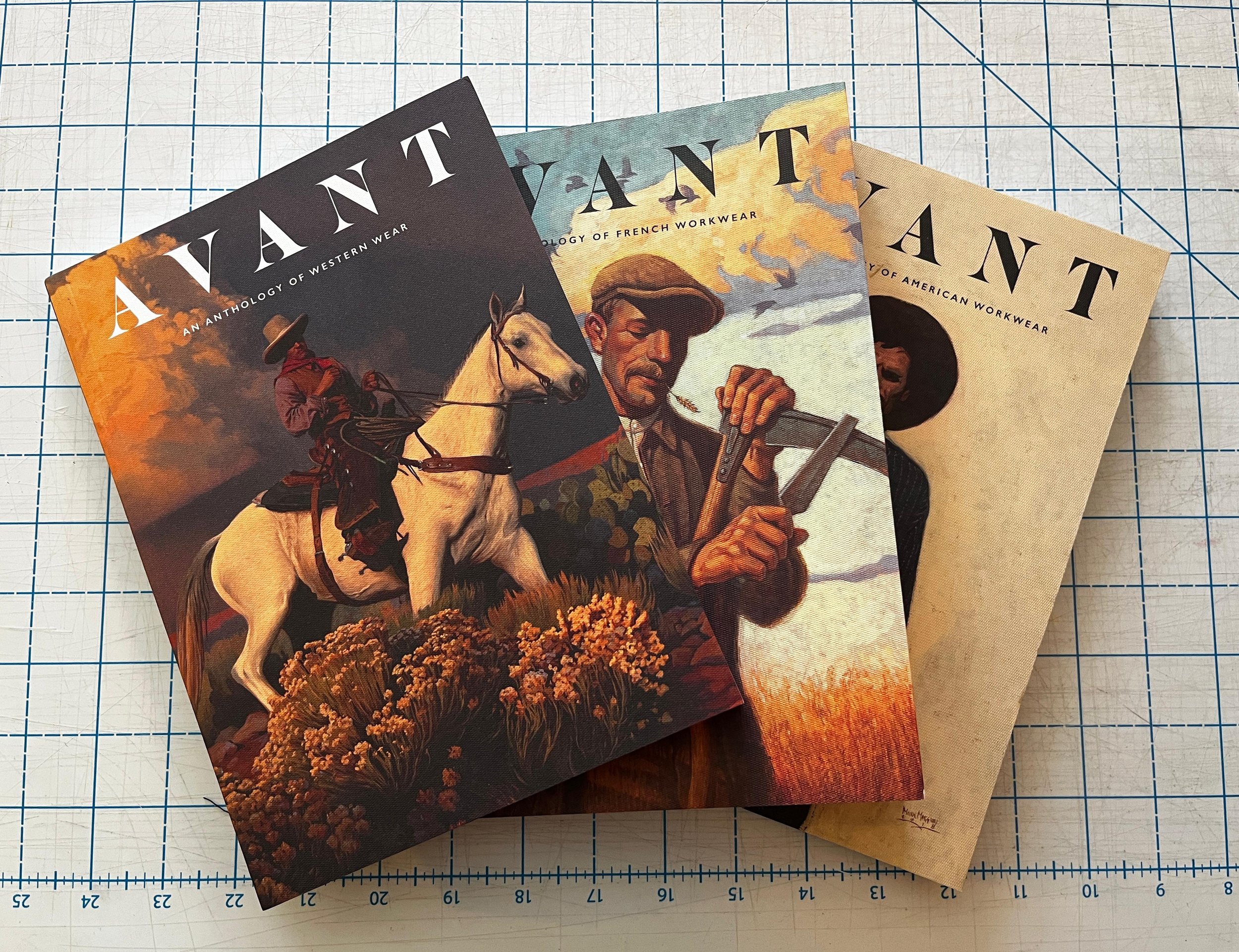
Reading… I just got these books that Christine from The Ordinary Folk recommended. They’re called AVANT. This one is American workwear, and I also have the French workwear and Western wear ones. There’s so much inspiration, magazine clippings and real photos.
I’m really inspired by workwear, especially construction elements, so I’m excited to dive in.
Q: Do you have a favorite sewing pattern?
Usually it’s the last thing I sewed. I love Daughter Judy patterns. I love all her patterns, so I’d probably say the Worship Jeans because they fit so well. She’s done an amazing job with her size chart and grading for a wide variety of bodies.
I also teach that pattern in my jeans sewing class, so I’m a big fan.
Q: What’s your most unique or niche sewing tool?
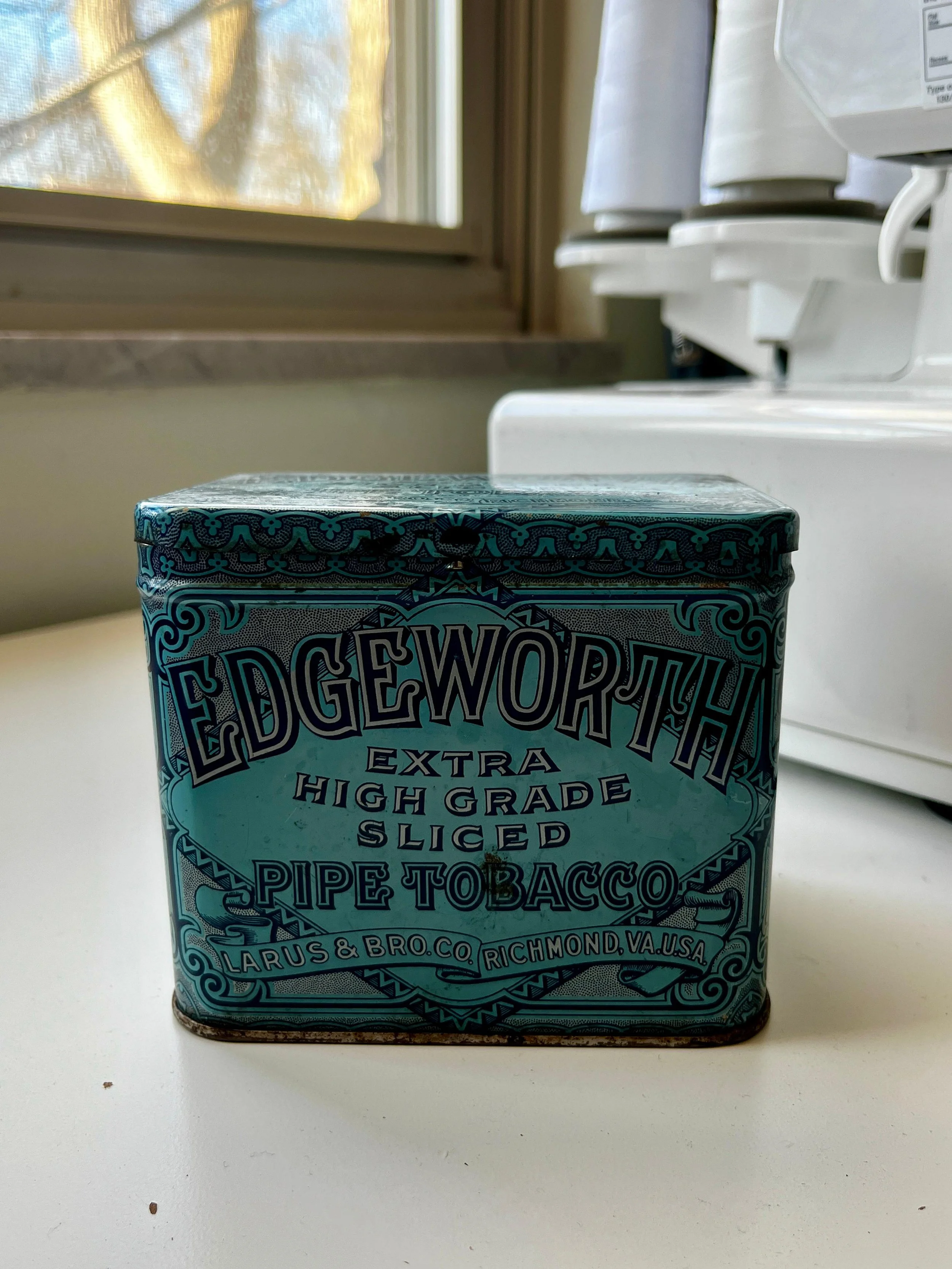
It’s not really a sewing tool, but it’s this extra-grade sliced pipe tobacco container. It’s my mini trash can. It’s so cute and vintage. I got it at a flea market in New York.
One of my best sewing friends had a mini trash can from Muji because her cat had to go to the emergency vet after eating a pin or thread, I can’t remember which. She’s super careful now, and I was like, “Oh my gosh,” and developed a new fear that my cat is going to eat my thread.
So we were going to go to Muji, but then I found this at a flea market and I was like, “This is so much better.” It’s perfect.
Q: Do you have any sewing hot takes?
Yes. More of a patternmaking hot take. If you think the sewing pattern is bad, it might not be bad. It might be that you don’t have the skills to understand it yet.
I’ve seen people use the hashtag #SoHonestFeedback and hate on a pattern and say it was really challenging, usually about the instructions. Sometimes it could be explained differently, sure, but often you don’t understand it because you’re not there yet.
And instead of being a hater, you could ask a friend. Go to your community fabric shop. Text someone online. Email the designer.
That’s a way to build community and learn through community rather than tearing someone down.
If this interview inspired you, check out our Confident Patternmaking & Grading Program where you can learn how to draft sewing patterns, and get support from Jess directly to create beautiful size-inclusive sewing patterns for all people.
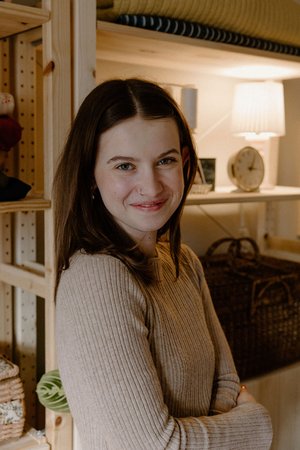
Nat Della Selva


You may also like ⬇️