Patternmaker of the Month: Brandon Hayden & Stephanie Lennox: Pattern Pending
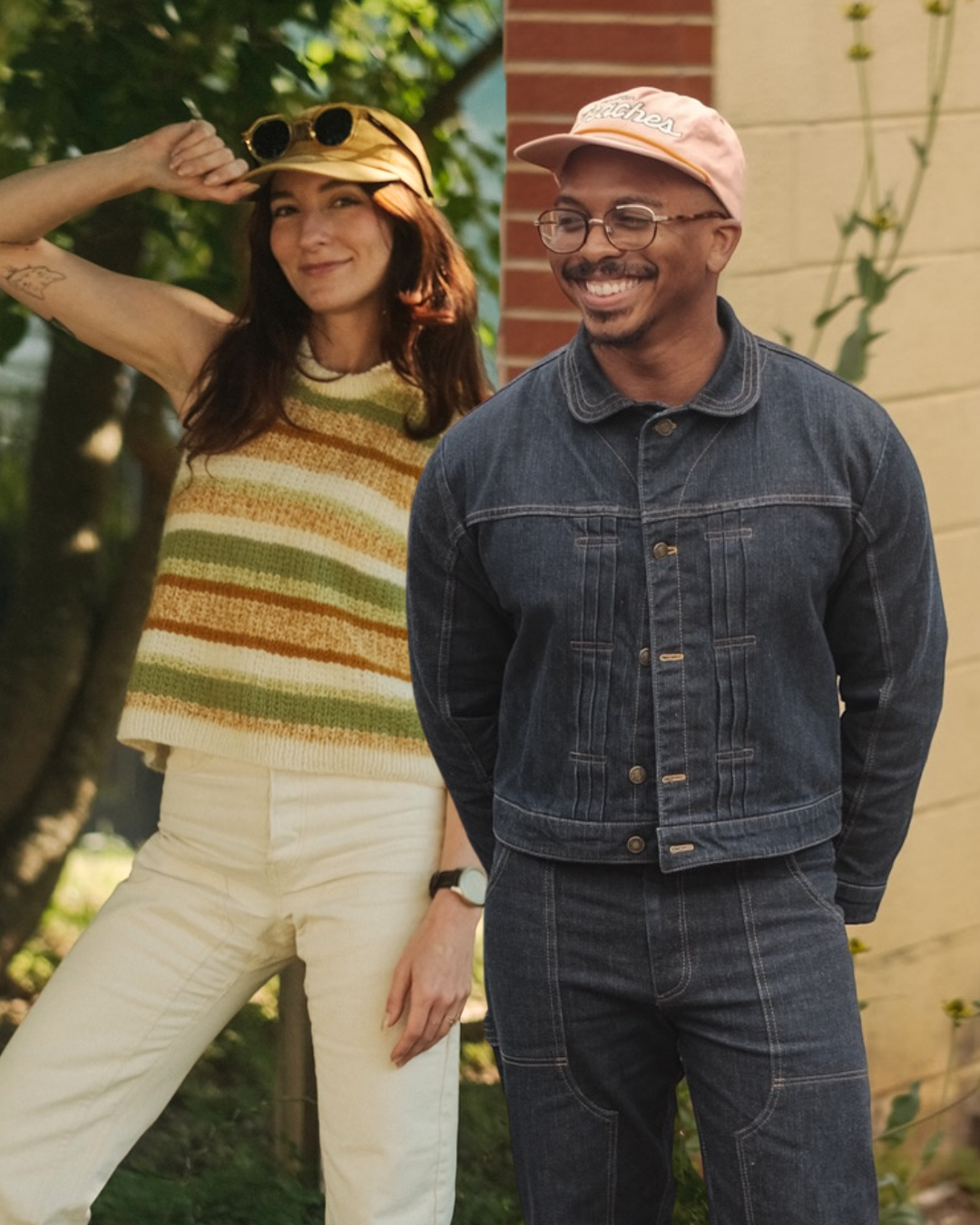
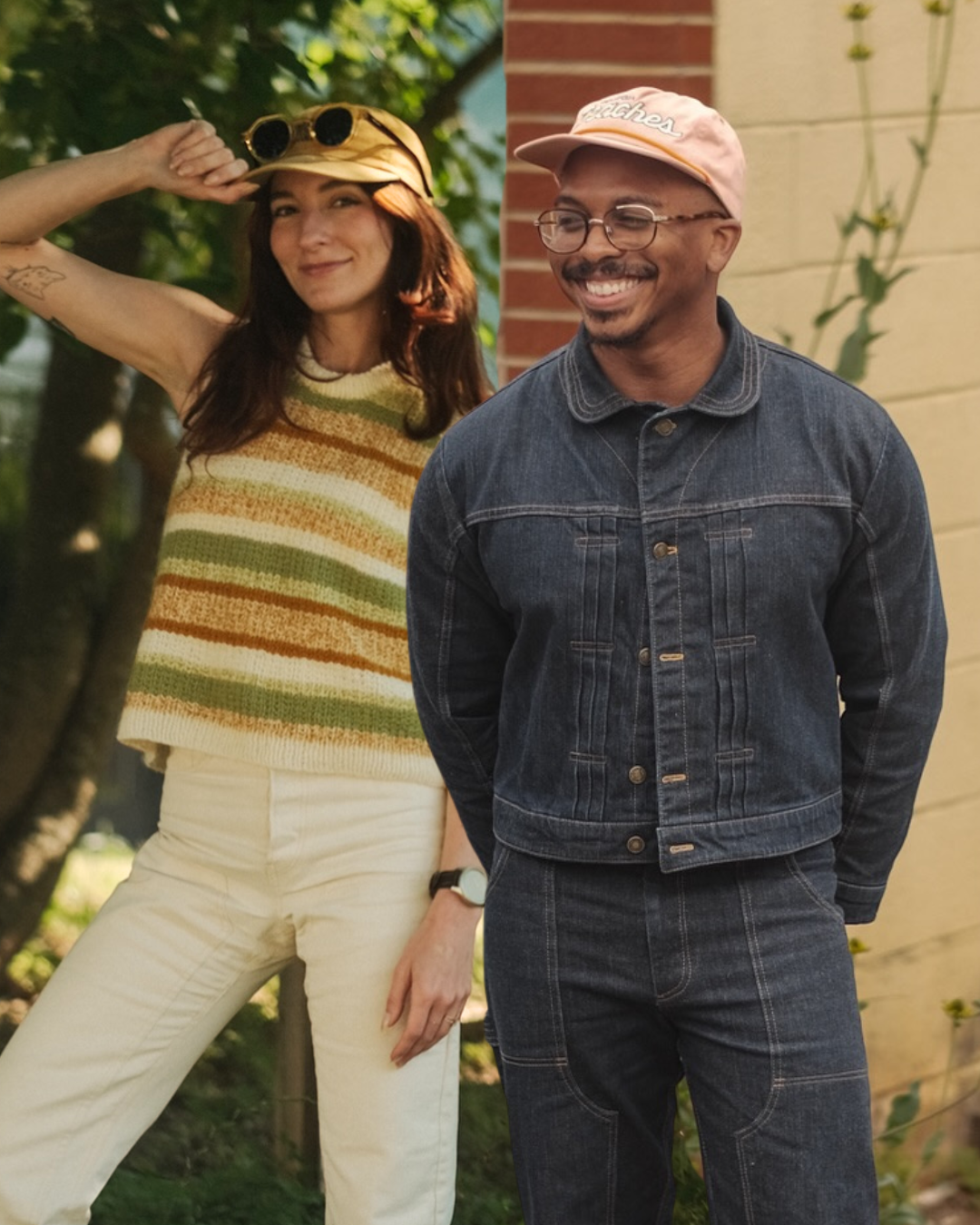
This month, I had the pleasure of talking with CPMG alumni Brandon Hayden and Stephanie Lennox, the designers behind the new project: Pattern Pending
Q: "Hi Brandon and Stephanie, can you both introduce yourself and tell me a little about yourselves?"
B: Well, ladies go first…
S: Okay. Hi, I'm Stephanie Lennox. I was born and raised in Georgia. I've got 3 cute girly kitties and a husband, a partner-in-life if you will. I've been sewing for a very long time. I got my first sewing machine for my 13th birthday. Took a pretty big hiatus, and then in 2017, I got engaged and decided I wanted to make my wedding dress. After that, I was like, “I think I can make anything now.”
I also love gardening. That takes up a ton of my time and mental space these days. It's so rewarding and, similarly to sewing, it's a deep well of knowledge that I keep digging into, and it feels like there's always something to learn.
Aside from sewing and gardening, I also do wardrobe styling in the film industry. I also do broadcast engineering and technical directing for live events and music festivals, kind of random. But it's all stuff that feels like engineering to me. You know, it all comes back to being able to figure out how things work, how things come together, and having an end result that's really exciting.
B: Yeah, and she's good at it.
Ok, I am Brandon Hayden. I live in Atlanta, Georgia, born and raised here. I like to say I'm a city boy with a small-town heart. I'm in the city currently, but I grew up outside of the city, and I love quiet streets. I don't have that right now, and that's okay. I'm running in the Atlanta streets, it's just as exhilarating, just less calm. But I love it here so much.
I have been sewing since 2017. I bought my very first sewing machine on November 15th, 2017. It came in two weeks later, because this was pre-Amazon Prime. So, I had to wait a while for it to ship, and my very first project was a pillowcase. I remember hand-sewing one in 1st grade. And so I was like, oh, this can't be that hard with a machine. So I went to JoAnn’s and I think I bought some kind of satin/poly blend. It wasn't great. And then I bought 3 “easy” patterns. When I got home, I made the pillowcase. It was fine. I was like, okay, I'm kind of getting the hang of this. I remember I opened up one of the Simplicity patterns that was supposed to be “easy”, and you get all this brown paper, these instructions that are like, so chaotic. And I said, “What?” I literally balled it up and threw it away. It was a waste of $18. And so after that, I was like, you know what? I'm just going to draft my own patterns. Clothing is just shapes. I think I can figure it out once I put it in my body. And so that's kind of when my journey of self-drafting began. Then, I bought a serger, and that really changed everything as well because now my clothes won’t come apart in the wash.
So, I continued to self-draft. And it changed my life and taught me how capable I am as an individual. It showed me that it’s my medium to take the ideas and bring them into the physical world. We all have a medium that exists in that way for us. And that was when Happily Dressed started. My sewing pattern business is a way to introduce people to maybe sewing being that medium for them, or just opening their eyes like, “oh, maybe I have a medium that I can express.” Like, I don't know what it is just yet, but maybe it's sewing. So, that's kind of how my whole sewing journey started, and Happily Dressed kind of weaved into that with this idea of agency, personal power, and being able to manifest your own ideas with your own 2 hands. So, when I sew, that's kind of the through line with everything that I make, patterns or clothing.
N: Oh my gosh. I am trying really hard to not interject because it's way easier to transcribe if I don't, but the whole time I'm like, mm, same, same, same. We're in such a unique, niche industry. And it can be easy for me to feel like I'm on this little island by myself. No one understands me or who I am in my craft and how much it means to me. So it just feels really good to talk to you guys and to hear you say we're all in the same boat. It's so meaningful.
S: Can I say something a little bit about that? I mean, that was a huge part of how this (Pattern Pending) happened. Because it is an isolating thing to work at home, be self-employed, not have an office to go into, and not have coworkers. Brandon and I met at a fabric event 6 years ago. We had known each other online, and then we met up at that fabric event, we immediately clicked, and then when we started working in tandem. It felt like, oh my gosh, it's so nice to talk to somebody who knows exactly what I'm talking about, especially in the niche sphere of selling patterns and making content for your job. It's been so rewarding in regards to work, but also personally, to have someone who understands your work, and give feedback in a way that's really productive.
B: Yeah, what Stephanie said is so true. Especially personally, not only has it affected both of our individual, professional careers, but personally, it's been such a godsend to have someone who understands the job that you do. Because I can talk to my mom. I can talk to my brother. I can talk to my best friends about this, and it doesn't sit with them the same way it does for Stephanie, where she truly understands what I'm going through and can offer advice and be there to shoulder some of the pressure we feel as independent pattern designers and content creators.
N: Working as a pattern designer and owning a business can be so isolating. And I feel like sometimes the experience that you have of feeling isolated, feeling unsure of what the next step forward is… Just being able to voice it and then for someone else to be like, yeah, that's happened to me before, or like that's happening to me right now. It allows you to feel like I can set this aside now, and focus on other things. Like I don't have to have that consume me anymore. Which I think for most people, they get that experience going to a job and talking to their coworker in the break room over lunch… Working from home, I feel like we don't get enough experiences like that.
I would love to talk a little bit more about your journey into pattern making. I know Brandon, you mentioned that you were doing some self-drafting pretty early on. Can you tell me a little more about that?
B: So when I got my sewing machine, it kind of started my self-drafting journey because commercial patterns were so complicated, even the ones that were supposed to be easy, they're just not, in my opinion. Even now, as a more experienced sewist, I can still sometimes open up a Simplicity pattern, and be like, “What do you want me to do?” And then in the end, you might end up with something that may or may not fit correctly. I feel like the size guide on it is like, “was this tested on a real human?”
So I thought, you know what… Sewing is just shapes, and sewing is a skill that existed before there were degrees for it, before there were all these patterns for it. People just literally either traced their bodies or traced shapes and made it work. And I think that there's a beautiful conversation that happens when you're not educationally trained to pattern-make because you get to see how the 2D interacts with the 3D. It’s not just like, I'm following these rules… You're discovering why those rules were invented through the troubleshooting of it. And honestly, that's so much more work, but I do think that it's super fruitful when it comes to making with that mindset because you're not just blindly trusting someone else's rule. You kind of already have this mindset that you're allowed to play with design and pattern making. And I think that beginning patternmakers might not want to stray because they're like, no, this is the way it has to be done. But truly what you pattern-make, you are doing what's best for either your body or the client’s body that you're working with. So there is, I think, a lot more room for experimenting with what works best, not just what’s standard.
But anyway, let me get back to the topic. I was self-drafting for a very long time. It wasn't until I found Victoria's course, back in 2023. And it changed the trajectory of my career. Victoria is so knowledgeable. She's such a thoughtful teacher, and she just really knows what she's doing. Before I took Victoria's course, I was always second-guessing myself, and if I had an issue, but didn't know the exact way to fix it, I just would kind of fix it in a convoluted way, and it would work out at the end, but it wasn't probably the best route to go. But then taking Victoria's course, I felt confident with the changes I made. I know there are some rules you just can't wrestle with, and that is really beautiful too.
And so after Victoria's course, that’s kind of where the idea of being able to draft and sell my own patterns really set somewhere safe and comfortable in my mind. So I have her to thank for a lot of the confidence I have with Happily Dressed, and the patterns I sell today.
N: How about you, Stephanie? What was your journey into patternmaking like?
S: Starting with my wedding dress, I think when I was deep-diving and trying to learn as much as I could in a short amount of time, I actually sewed up and pattern-tested for a lot of other indie pattern makers, and I feel like that taught me a lot. I love a deadline!
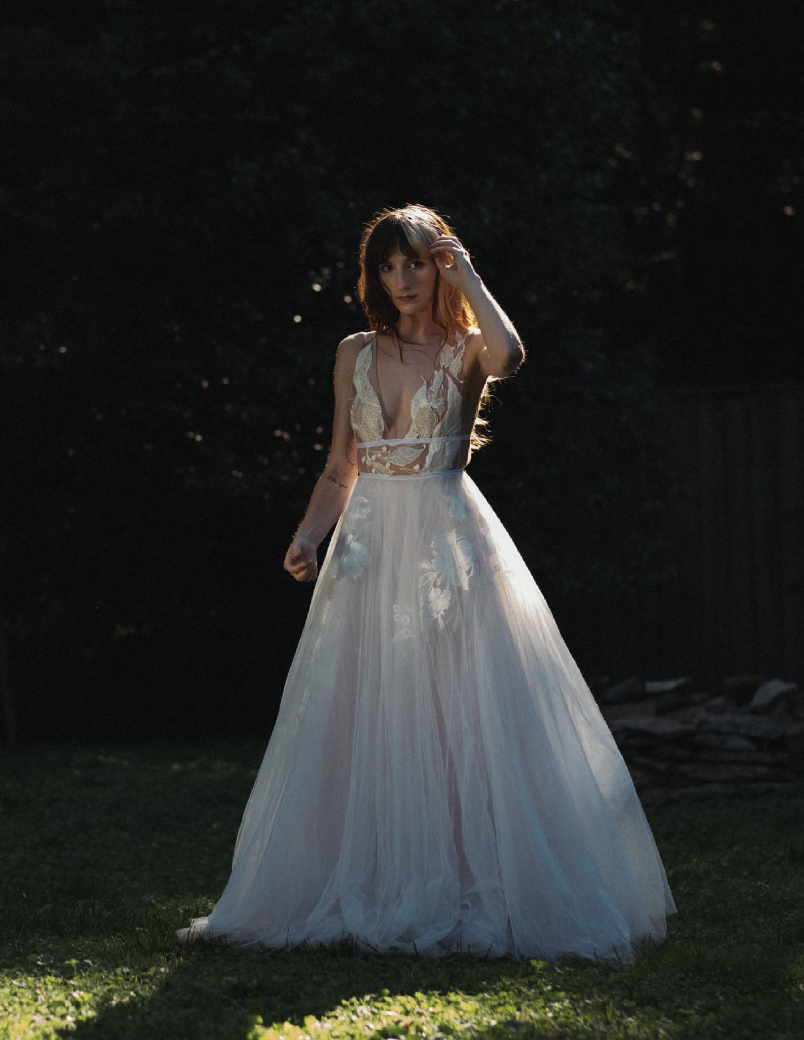
And then when it came to my wedding dress, it was loosely inspired by a dress I had tried on while wedding dress shopping, so it was just a lot of trial and error and reverse engineering. And I would say patternmaking for me kind of started with scrubbing a pattern off of something I already had. I think that's a great place to start, especially if you have an item of clothing you really love.
I had released the Penny Pullover and Steph Time Side Tie Top, from 2022 to 2023, just on my own. I used Sanna from Paradise Patterns to grade my patterns for me, which was an incredible resource. She's amazing! But there were times in the testing process where she was handling all of the digitizing and little adjustments I needed to make, and I felt this disconnect. Where I was like, okay, I know what the problem is, but I don't know how to fix it. I was, at the time, mailing her paper patterns that I had made to Hawaii, where she lives. And I kept thinking, “what if they get lost?” It just felt like, within that process, even though I think that I had some really good products, it felt like if I ran into an issue, I didn't know how to solve it and that really aggravated me. Also, I wanted to understand the whole process and not have to rely on somebody as much if I needed to make little tweaks. And I think it made me feel some imposter syndrome because I didn’t know how to use Illustrator to its fullest. To be fair, that's not my favorite part of the process, so I still often do outsource that, but, the digitization, making little adjustments, and fully drafting digitally was something that came from this course that I did not have prior.
Now it's so much easier and it's just a much more streamlined process. I feel so much more confident, and now it feels like, oh, I have an idea, let me draft it. I can make a toile of something in a day, which feels like a superpower, honestly. I was making a dress for a film festival for a film I had costume designed for last year in Montreal, and I kind of wanted to make a dress for the premiere. But it was the week before, because that's how I roll. Again… I need a deadline. And from concept to final, it was pretty quick.
And I think the knowledge is nice to have as a resource that doesn't require going to school and doesn't require in-person classes. And people always have something to say about whether you're self-taught or not, but ultimately, there's room for everyone in this space, and I think everyone learns differently too.
N: I feel like the theme of mentorship and community keeps coming up in this conversation. When you're doing stuff alone, it is just so hard, and it's hard to have self-confidence without the affirmation of someone else being like, I have this knowledge, I can share that with you. So I'm curious, Stephanie, do you now do everything digitally, or do you like to combine paper patterns and also digital?
S: It's a little bit of both. I'll usually start digitally unless it's something really small. If it’s something really small, I just draw it out. (But otherwise) It'll start digitally, and then I'll use my projector to do the first couple of toiles, just to make sure the fit is generally where it's supposed to be. Then I'll do paper, print it out, that way if I have any notes or adjustments I need to make, I find it easier to just write on it for safe keeping. So, a combination of both.
N: Okay, well, speaking of community and exciting projects, I'm so excited for this project of yours, Pattern Pending. I'm obsessed with the name. I want to know how it began, and what the vision for this project is?
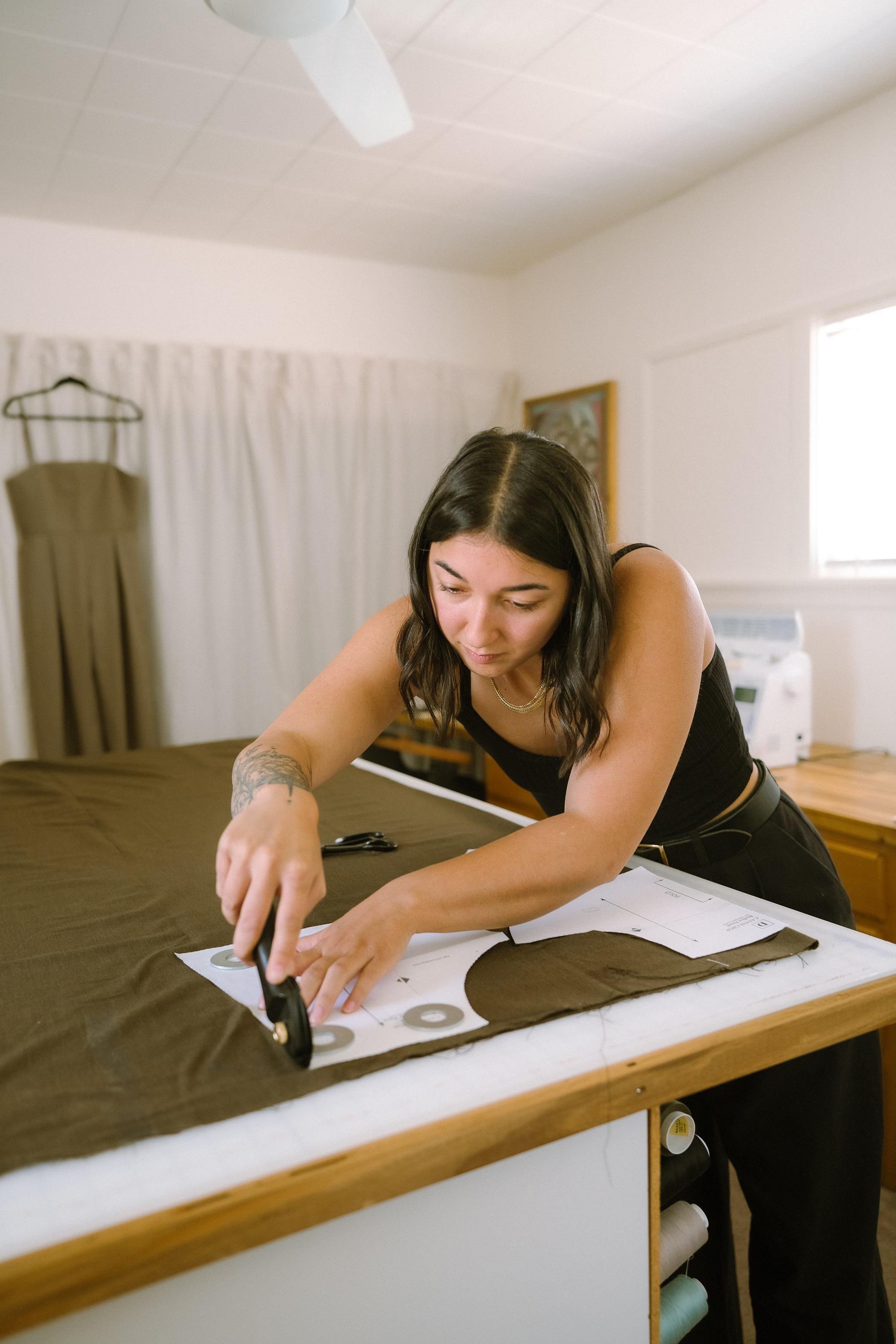
S: So, It started as a co-working thing. It really started with editing videos because it's part of the (content creation) process that neither of us are super stoked about. We love the creating, the shooting, the conceptualizing, and then when it comes to the boring parts, I just kind of need someone to babysit me while I get it done. I need someone to make sure I'm working. So, we got together for that purpose and then we just started talking instead of working.
B: Yes. Which was also totally fine. But I would say there were a couple months there where we just kept being like, what if we did something together?… We were kind of shy about it.
S: Yeah, you know, still testing the waters, but I think ultimately it was a challenge for us. Like, okay, what if we try to give ourselves a little bit of a timeline? What if we tried to have these constraints around making something? And so, now we have completed our first project together. It’s a pattern that we're working on separately now, getting all the instructions, grading, and illustrations done. So pretty soon, I guess we will be going into testing for that.
B: I think we were very eager, at the beginning. And then we remembered that we have other projects.
S: We also have lives!
B: Yeah. We can do this in five weeks. We could, but at what cost?
S: Yeah. We almost paid it!
B: It feels like we're talking about when we first started dating. And for the record, I’m single, ladies.
S: Oh, man. That’s my work husband!
B: But yeah, when we first started coming, I personally just wanted a coworker. I knew Stephanie would understand the job I did. So no matter what we talk about today, I know it's going to be beneficial to me because she understands what I do more than anyone else in my life currently. And so, we were just kind of toying with the idea of what we should do together. Do we create a single pattern together? And then one day we kind of had the idea, maybe Stephanie should take this… you had the idea about parameters, because I'm not a parameter girl.
S: Well, I would just never get anything done. In September, I was like, maybe we should create a pattern from a topic or a prompt with a deadline. Honestly, that sounded kind of fun. So for one of our sessions here, the whole day, I was just like, we need a name, let's think of a name. We went through so many! We knew we wanted our project to be like a drafting practice.
B: That was almost one of the names, Drafting Practice. Where we just gave people a behind-the-scenes look into what it takes to be an independent pattern designer and all the things that go into being an independent pattern designer. Because we both love to share and I think that's something that we have in common. Stephanie’s YouTube is amazing. My YouTube is not looked after, but that's okay.
S: Yours is also amazing.
B: But we both light up when we get to share what we're doing with other people. And so I wanted that to be something we can do together. Pattern Pending came at the very end after we had discussed so many names. I love alliteration, and also the pun or the closeness to patent pending, and the direction for what it's going to look and feel like. Once (the pattern) is done, we're putting the stamp on it.
S: Yeah, we're working on this project together, but then we're releasing these patterns separately. Individually and separately. It's not a combined pattern business. It kind of felt inevitable that we would work on something together, and we're still figuring out what it looks like, what we want to share and how we want to share it. Also in a way that feels realistic for our lives because like, Brandon just released a pattern last week. We both have all these projects that we're also working on and, you know, we have brand deals and freelance gigs, and also life happening.
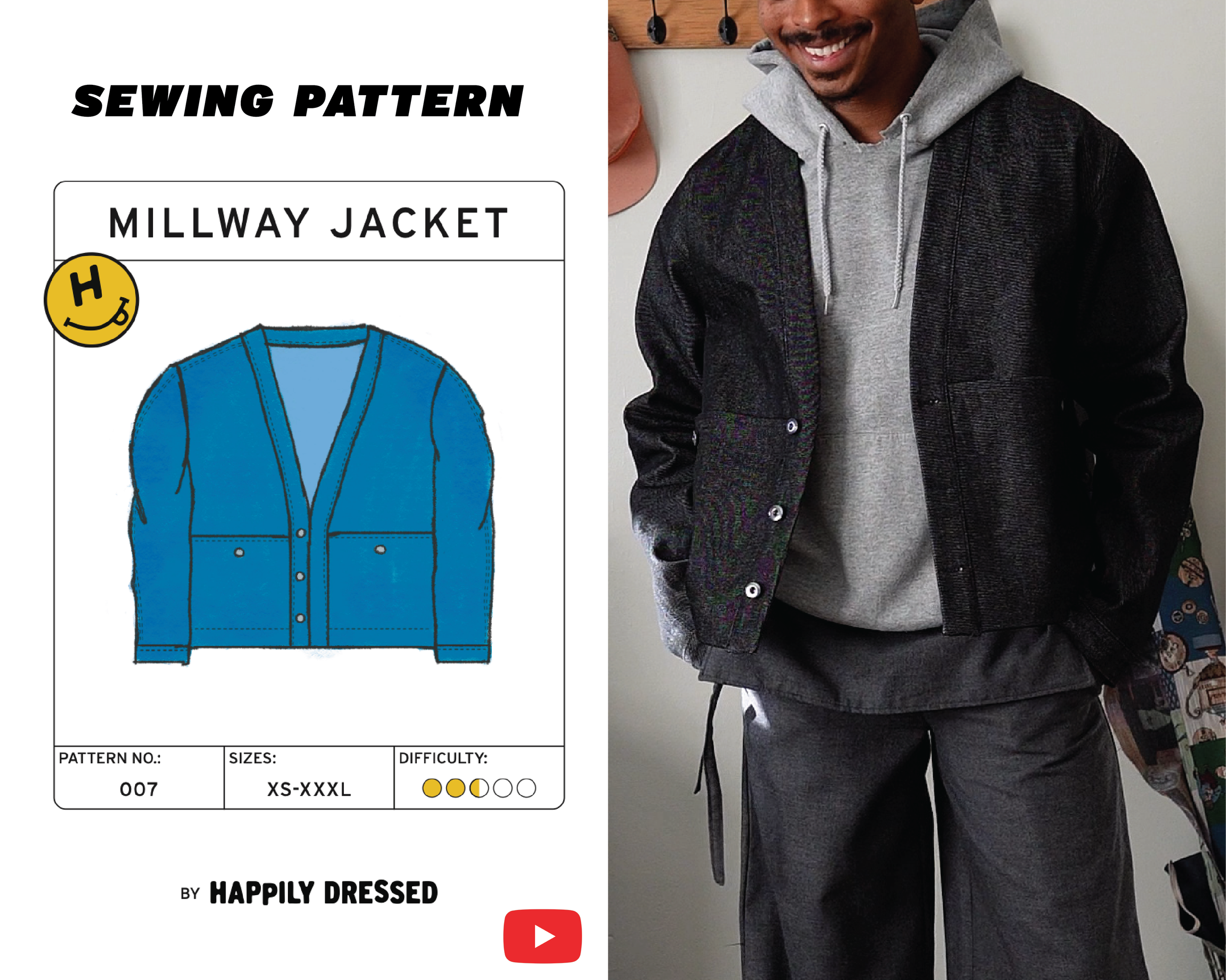
B: I’m not sure if prompt-based is how we'll continue to go. But it's been super neat to see our individuality in our creations while working towards a similar goal.
I think in the future, we'd love to bring on guests every now and again to interact in a prompt with us. Do you want to share the prompt that we did last year?
N: That's what I was about to ask! And then, I want to hear more about the pattern if you're ready to share about it.
S: Yeah, our prompt was “easy pants.” So, (what we meant by that was) no zipper. I wanted it to be approachable for a beginner. I feel like a zipper is where a lot of people get bogged down. (And so we decided) we’d just make an easy pant, which I think people would think of as an elasticated waistband, but we were really trying to go with alternate closures. So, buttons or ties. Things that would still be approachable, but elevated. And I think they made the most not easy, “easy pants.” Because we just kept being like, ooh, what if we did this? What if we did that?
I ended up with a wide-leg pleated trouser that has a crossover flap over the front, and then on the right side, it has a buttonhole that the other side of the pants goes through. It's kind of confusing to explain, but it's kind of akin to how a kilt works. It's got 2 buttons on each side, so it’s a variable fit. I'm really happy with it.
S: Yeah, our prompt was easy pants. And (what we meant by that was) no zipper. I wanted it to be approachable for a beginner. I feel like a zipper is where a lot of people get bogged down. (And so we decided) we’d just make an easy pant, which I think people would think like elasticated waistband. But we were really trying to go with alternate closures. So like buttons or ties. Things that would still be approachable, but elevated. And I think they made the most not easy, easy pants. Because we just kept being like, ooh, what if we did this? What if we did that?
I ended up with a wide-leg pleated trouser that has a crossover flap over the front, and then on the right side, it has a buttonhole that the other side of the pants goes through. It's kind of confusing to explain, but it's kind of like how a kilt works. It's got 2 buttons on each side, so it it’s a variable fit. I'm really happy with it.
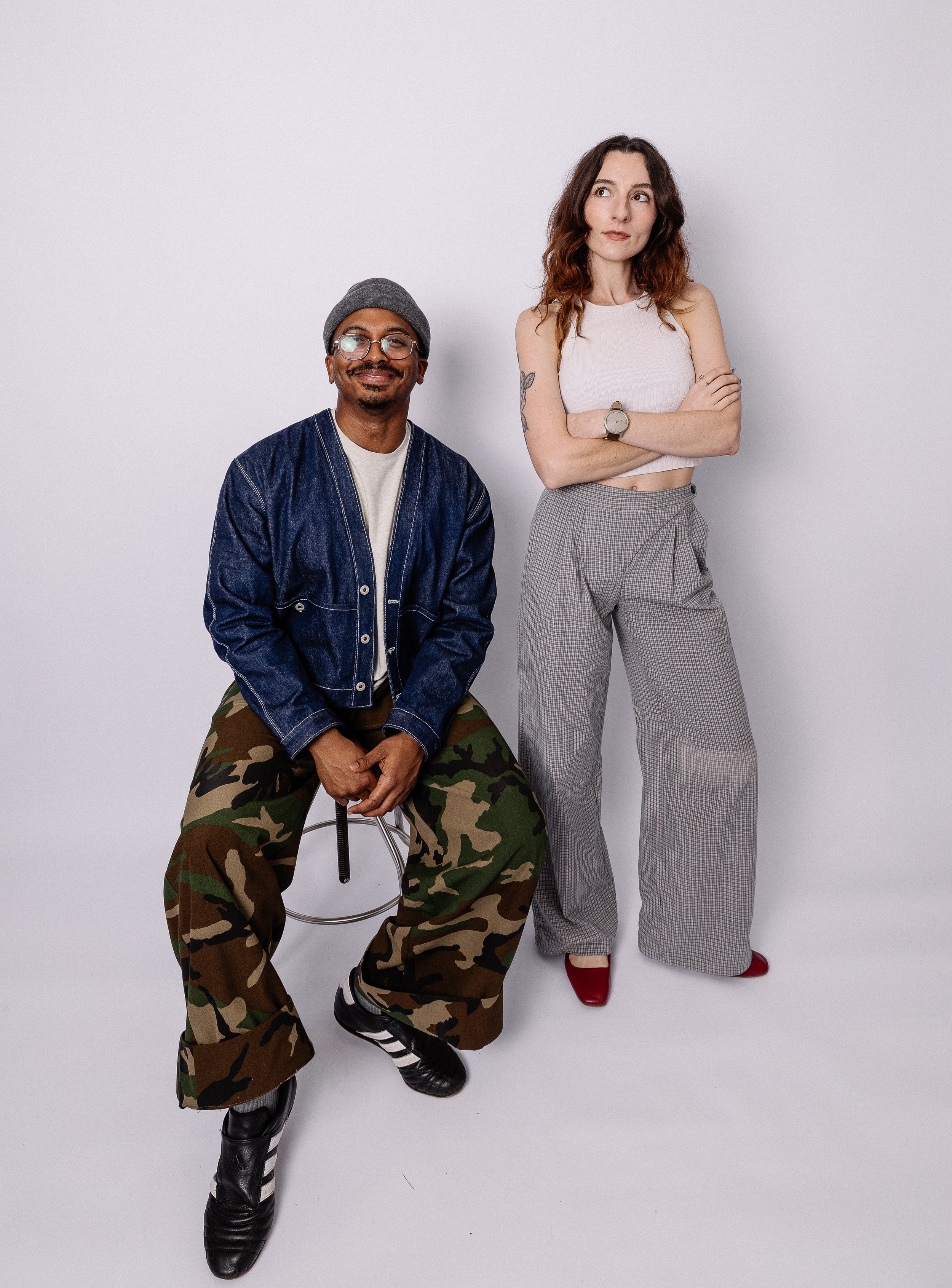
B: My pattern is called The Studio Pants. It was inspired by an apron pant of sorts. I've always wanted to do a “scant” (a skirt pant). The idea of having some kind of apron in the front to put tools or whatever you want. It's a wide leg trouser with a 3 inch cuff on the bottom, which I really love. It’s a separate front and back panel for the apron section. Because, you know, men get so weird if it was like one whole skirt piece, like “I don't want to wear a skirt”, but if I disguise it as a front and a back panel…
N: I love it! It’s very you, Brandon. It's got the workwear element to it, and it’s so unique. Thank you both so much for sharing.
Rapid Fire Questions 🔥
Q: What are you reading or listening to right now?
B: Keilani's new album
S: I'm reading the Dungeon Crawler Carl series. I’m on the 7th book, but I'm listening to it. This book is like 28 hours long. And I'm watching Survivor, every Thursday night.
Q: Favorite sewing store?
S: We have to acknowledge for a moment, RIP JoAnn. There was one right around the corner, you know, when you need something last minute. That was a great place to go.
In terms of fabric quality, love me some Blackbird fabrics. The tariffs are rough. Honestly, I get a lot of fabric from the thrift store, that's kind of like where I started. It's super affordable, and allows you to make mistakes because there's not a huge cost involved.
B: I love our local fabric store here called Gail K Fabrics. They have really cool things. When I’m online shopping, I like Pacific Blue Denim. They’re an LA-based, fabric company. Their shipping is outrageous, but I do love to use them. I also like Patriot fabrics. And whenever I order for them, because I am in Georgia, I'll pay my invoice on Tuesday, and it will be at my door on Wednesday. It is so quick. Really good quality denim.
Q: Favorite sewing notion?
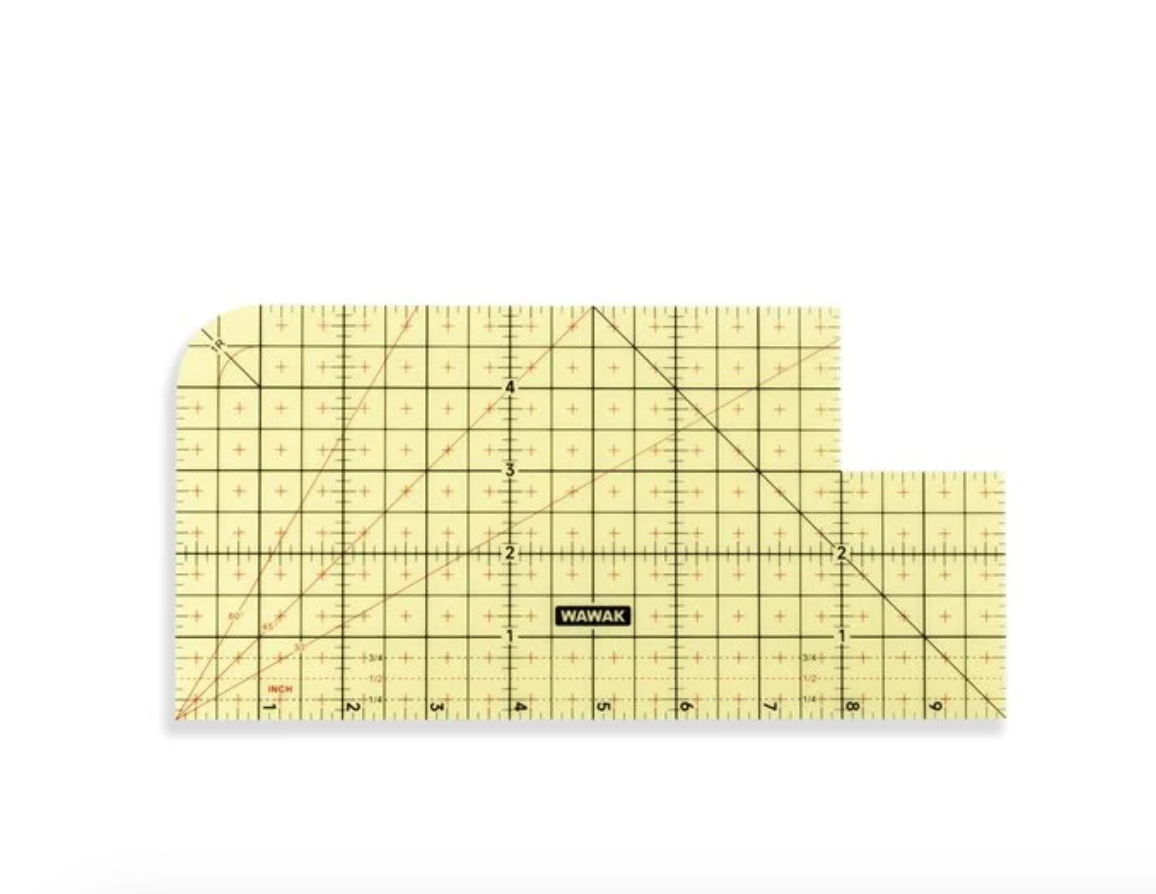
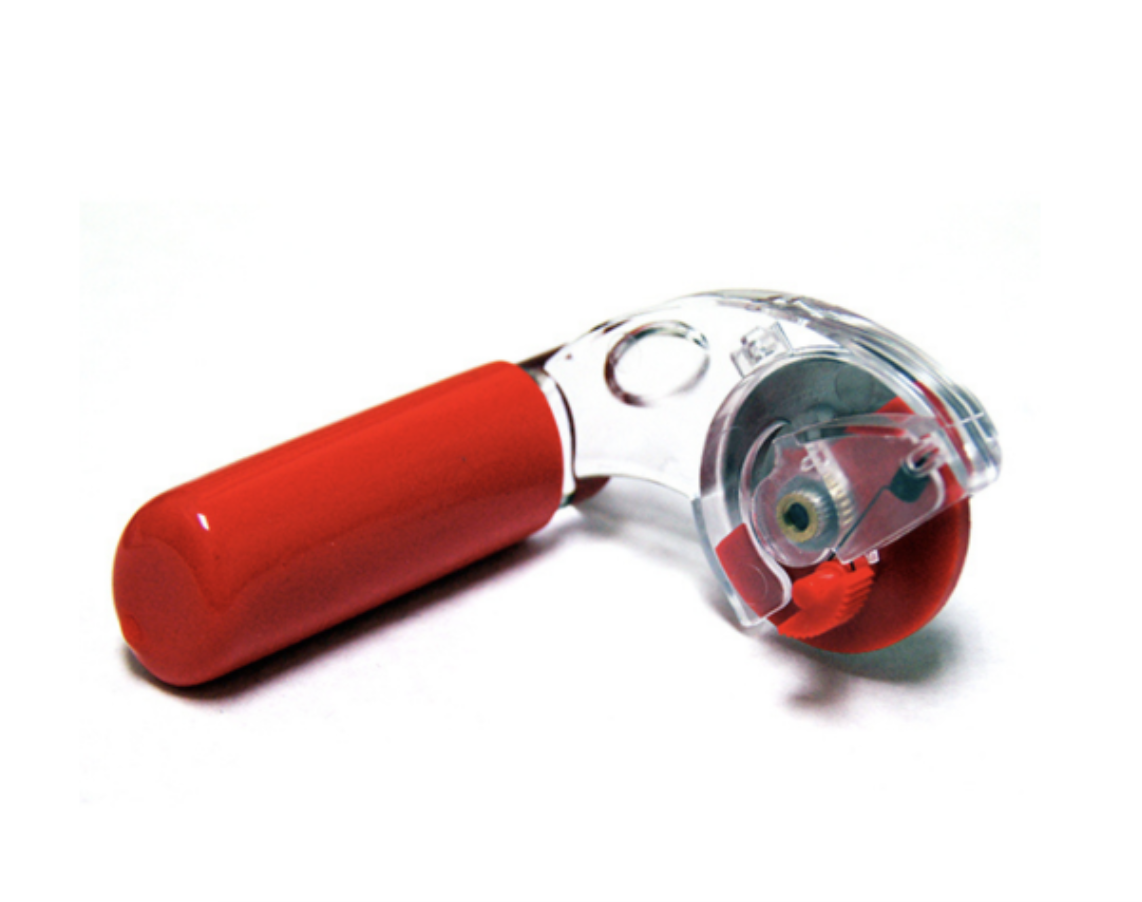
B: I love my heat ruler. I use it for my iron to iron down seam allowances and hems.
Q: Do you have any sewing hot takes?
B: I'm just seeing a lot of similar shapes.
S: What you're saying is the majority of what's on the market is boring.
B: Period. I think everyone needs to get their sea legs somehow, but there are so many button-up shirts, that all look the same. There's a market for that, for sure, and it tends to lean more beginner-friendly. I think that we need to be a little bit less critical (of designers) so that there's room for those new and interesting designs.
S: My hot take is you really don't need a bunch of fancy stuff to get started. As this community grows and as people are trying to pedal products for brand deals. I just feel like you don't need any of it. You don't need to have schooling, and you don't always need to take classes. There are a lot of free resources and honestly, the best place to start is just to try.
Oh, in addition to that, my other hot take, is you need to be okay with failure. That is just part of it. I’ve talked to people who say “I'm just so scared to mess up…” Yeah, mess up! Please, get it over with faster. Fail fast. You'll learn from it.
Q: Online sewing creator crush?
B & S: Nisan @the.social.fabric !!!
Q: “Finally, where can people find you?”
A: @thepatternpendingon Instagram.
Stephanie @bystephtime on Instagram, and at her website
Brandon @happilydressed on Instagram and his website.
If this interview inspired you, check out our Confident Patternmaking & Grading Program where you can learn how to draft sewing patterns, and join our network of incredible alumni creating beautiful size-inclusive sewing patterns for all people.
Nat Della Selva