Patternmaker of the Month: Erin Ford
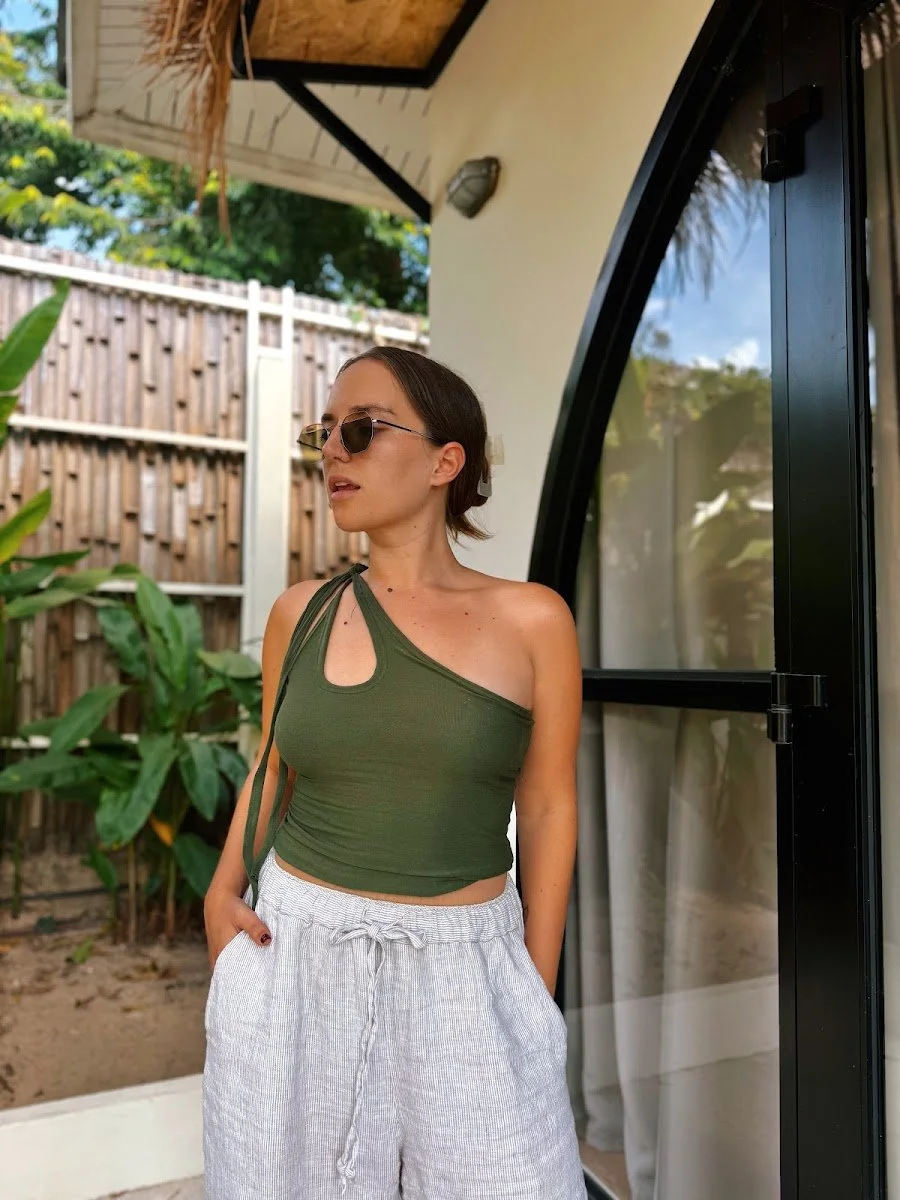
This month, I had the pleasure of talking with CPMG alumna Erin Ford the designer of the newly released Viper top (seen above).
Q: "Hi Erin, can you introduce yourself and tell me a little about yourself?"
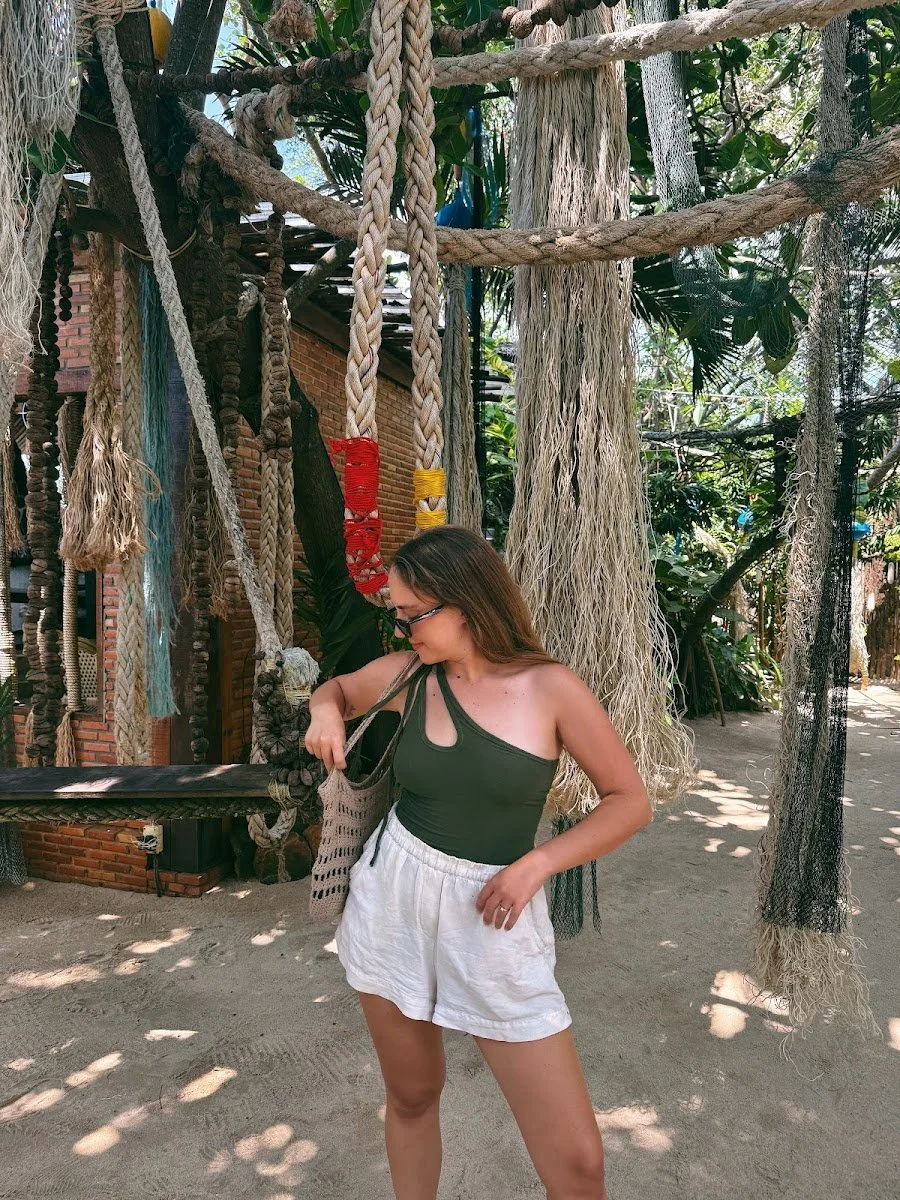
A: My name is Erin. I'm originally from Australia, but I've been living in Thailand on and off for about 8 or 9 years, 2 years permanently now. Before that, I was working and traveling remotely, which is actually why it took me so long to learn how to sew.
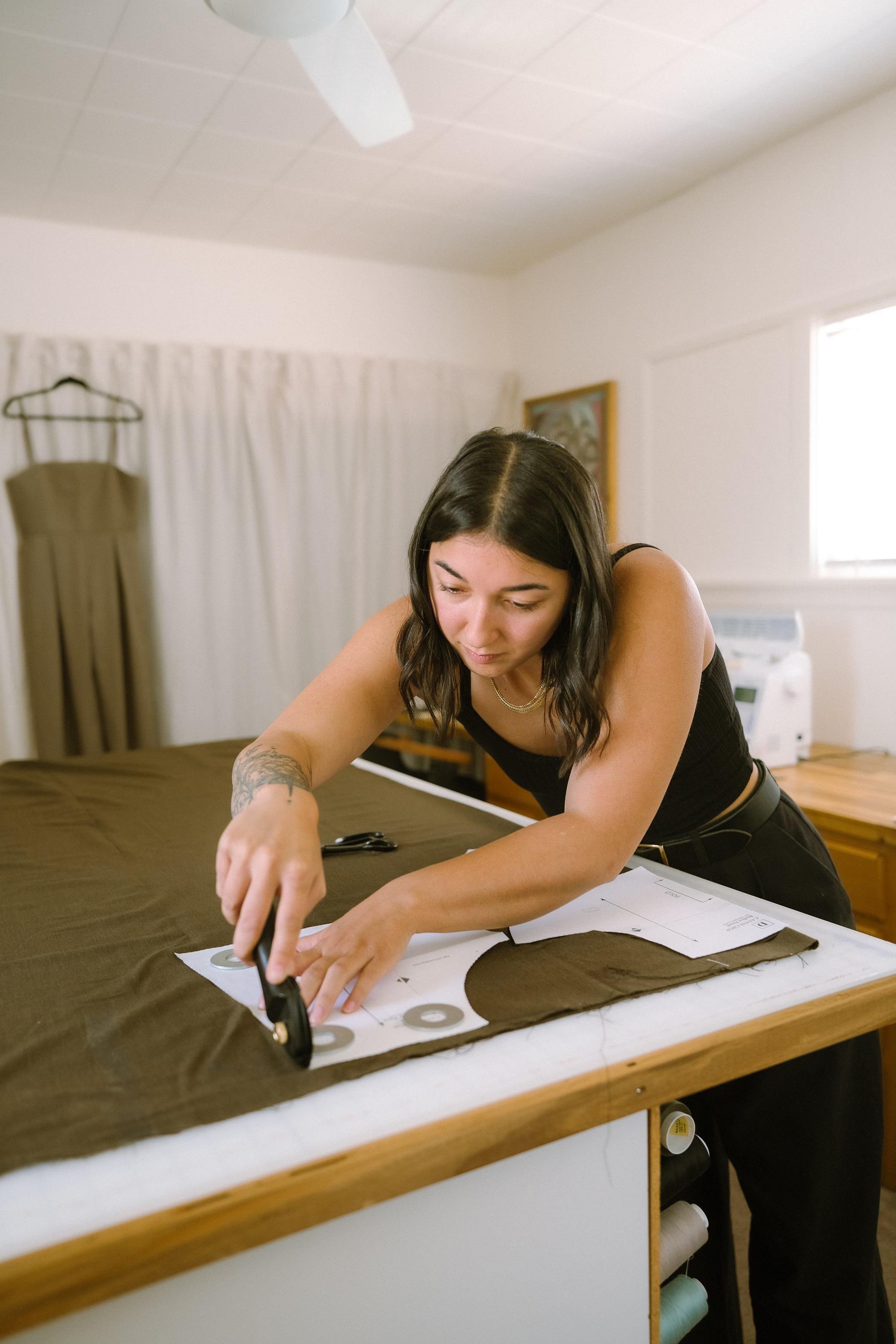
Sewing and pattern making are one thing for me. I learned to sew the same year I learned to make patterns.
I also have a dog named Alfie.
N: Oh, that's so cute, I love that name. What kind of dog is he?
He's a Thai mutt that came down off a mountain. We were here during COVID on this island, which is kind of how we ended up settling here. We fostered him for something to do, and obviously we never gave him back.
N: Does your partner also work remotely?
My partner was already working remotely when I met him, I was 21 and backpacking, and he was living and working at a co-working space on the beach where we live now. I met him and all his friends and was like, what the hell? I didn't know you could do this! So I made it my mission.
All my prior work experience was in hospitality and nannying, but I was determined to get an online job. It took about a year. I ended up getting a few shitty online jobs first, and then landed a really good one doing copywriting for an email marketing app.
N: Oh my gosh, wow. I'm just in awe. It sounds like a beautiful life that you lead.
E: Yeah, it's been very exciting.
Q: "Tell me about your sewing & patternmaking journey. How did you get started, and why did you want to make patterns?"
A: I have this very clear memory from when I was 15. I was watching Gossip Girl, and there's this character, Jenny Humphrey, who makes all her own dresses and ends up having a fashion show. I thought it looked amazing, so I dragged my dad to Spotlight, which is like the biggest fabric store (kind of like Joanne's) in Australia, bought some random fabric and elastic, and decided I was just going to figure it out. I didn't look up a single tutorial or textbook. Obviously, it went horribly, and I never tried again.
Then I was traveling full-time through my early 20s, and you can't really fit a sewing machine in carry-on luggage. But I'd always watched sewing content as a hobby, even though I didn't actually sew.
During COVID, the interest got reinvigorated. I was in Portugal at the time and couldn't buy a machine, so I started learning to crochet instead. That set my soul on fire for making things with my hands, and it also taught me how to follow instructions–something I clearly lacked at 15. I started with little animals, where you get dopamine hits as the shape comes together, then moved on to knitting because I wanted to make my own clothes and it used less yarn.
When I finally moved back here, the first thing I did was buy a sewing machine. The patternmaking brainworm came almost immediately whenI bought my very first sewing pattern, the Lea Dress by Sewing with Solana, and when I printed it out and tiled the whole thing, I looked at it and said out loud to my husband, "I can make this."
I'd had a brief stint in graphic design college. I didn't finish the certificate, but I'd learned the pen tool in Illustrator. So I started looking up how to draft patterns in Illustrator, but there wasn't a lot out there in 2024. That's when I found Confident Patternmaking. I couldn't find many reviews. (I think I found one, maybe Jess's Instagram) and I was worried Victoria wasn't going to run it again because the last intake had been a year prior. Then Jess posted something like "I've got a secret, comment 'secret' to find out what it is" and I just knew it was about the course. I was like, give it to me.
Q: You have 3 really beautiful sewing patterns (The Sable set, the Saddleback dress, and your most recent release the Viper top) and you haven't been doing this for all that long. It kind of feels like, as you tell me more about yourself, that, like, you're the kind of person who digs into something, and when you set your mind to something you give everything to do it. I would love to hear more about your experience creating these patterns. What inspired you? Do you have a specific method for the process?
A: I launched the Sable Set last March. I already had the vision for it when I started the Confident Patternmaking course, so my process was going through the course, being spoon-fed how to do things, and asking questions in the Facebook group. I was determined to finish before the 3 months were up, so determined that I actually still haven't made my pant block from the course! But I haven't needed it because I haven't made any pants.
When you say I'm the type of person who just does it, yes, but it's also just do that one thing. I was determined to release a sewing pattern, and I followed that through to completion. Then I went maybe 6 months before I even looked at drafting anything else.
The Saddleback Dress was a whole other thing because it has so many more pieces. I don't really have a set process. I have a boring order of action: drafting, grading, then instructions. But in terms of deciding what to draft? I get that little click of "I'm going to do this thing" and I follow it all the way to the end. Everything else in my life falls apart when I'm about to release a pattern. You should see the state of my sewing room right now.
I get tunnel vision on whatever I'm working on. It's actually getting a little better though, I recently had an idea for a little top and quickly whipped up a V1 in the middle of my current project, so now I at least have a file to come back to. That's an improvement, because usually I don't even write ideas down or sketch them. I just think, oh, that idea (which is not a good system, by the way).
Q: What are your 2026 patternmaking goals?
A: My short-term goal is to get the dress I'm currently working on released. But more broadly, since I started this whole sewing and crafting journey, I've realized I'm happiest when I'm learning something new. So this year I'm trying as many new things as possible. I recently started reformer Pilates and now I go 3 times a week, and when I get back from Australia, I'm signing up for an 8-hour pottery course down the street.
My patternmaking goal is to release 3 more patterns this year, including the one I'm working on now.
Q: Can you tell us a little more about this dress pattern you are working on?
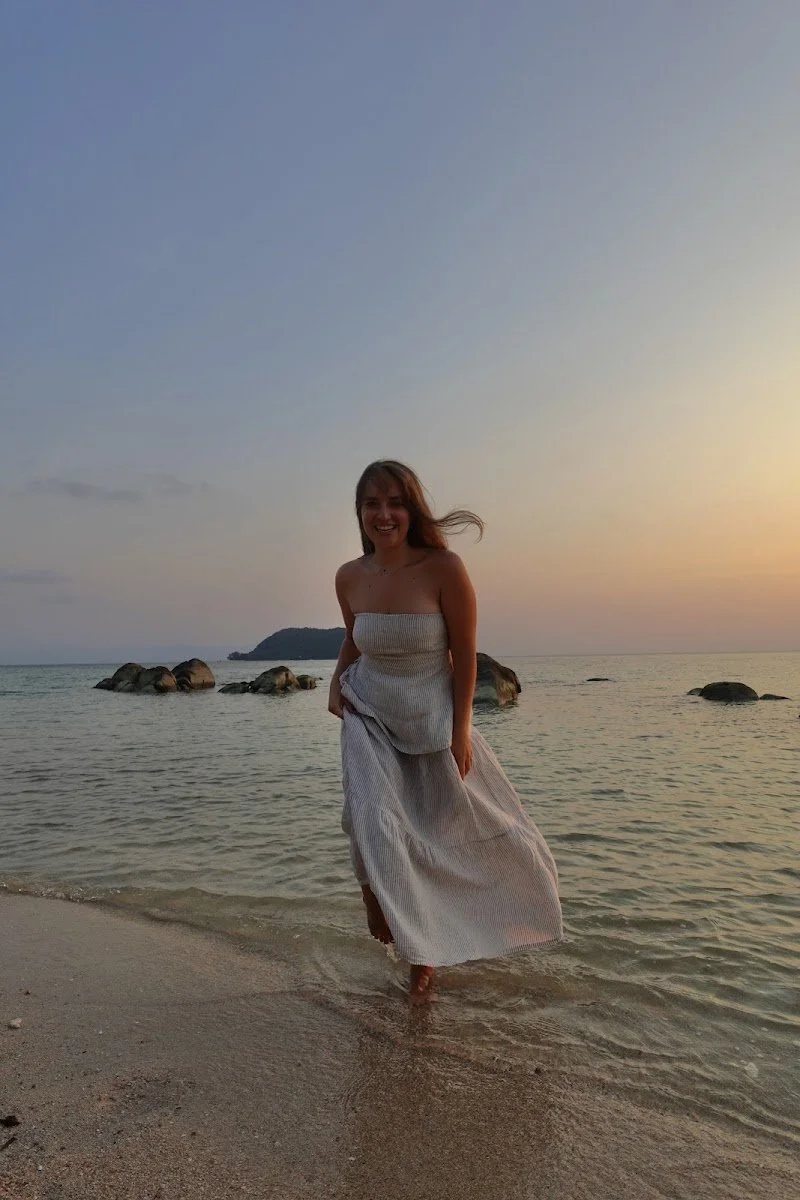
A: Yes! It already has a name: The Cicada Dress. It's another knit pattern like the Viper Top, so I'll have 2 wovens and 2 knits. It'll be available in mini and maxi length with the option of trumpet sleeves or sleeveless. There's a little tie in the back to keep it from slipping off your shoulders because the back is quite deep. It's what I imagine wearing on the beach on a summer night.
I'm hoping to get it out before US summer, since that's where most of my audience is.
Q: I love your online presence! I want to hear more about your journey to sharing your sewing online, and now your sewing patterns.
A: Making sewing patterns is one thing, but selling and marketing them is a totally different ballgame.
As I said, I knew before even sewing up my first project that I was going to make my own patterns. So after my very first sewing project, I made an Instagram and just started posting what I was making as a beginner. As I progressed and started learning patternmaking, the content shifted toward that.
My goal was to have some semblance of a captive audience by the time I released my first pattern, because you can have the most beautiful, well-constructed pattern in the world, but if no one knows it exists, no one's going to buy it. Social media is just one of those things you really need to have.
If you scroll back to the beginning of my Instagram, the videos are terrible. I didn't seem confident at all. It took me ages to start doing voiceovers. I didn't want to show my face or talk on camera. But every time I posted, the world didn't come crashing down. My following was 99.9% women, so the comments were always pretty nice. I just got used to it. Now I post stories with greasy hair, no makeup. If you feel scared or insecure, you just have to do it anyway, and then you realize it doesn't feel as scary.
N: I do think it just comes down to doing it over and over. I feel like when I take a break, it is so much harder to come back to it because I feel just so out of practice.
E: Yeah, you should see the unedited versions of my 30-second reels, the raw file is probably 5 or 6 minutes of me rambling.
I don't write a script. I'm sure there are things I could do more efficiently, but my brain can only handle so much planning, so I focus that energy on patternmaking. If you track my Instagram activity, you'll notice I post a lot less when I'm working on a pattern. I can't think about anything else.
Q: Did you feel there was like a change when you started selling your sewing patterns or do you feel like because people had already trusted you, it just was sort of like a natural progression?
A: When I released my first sewing pattern, my Instagram audience was about 50% aged 65-plus. I had a bunch of aunties going, "You go, girl!"
N: That's so unexpected, but I love that.
E: What happened was I'd made one intro-style reel that gained almost 8,000 followers, but they were all 55+. I think it's because my great-aunt Shirley was the first to comment on it. It's leveled out now to majority 24–35.
But to answer your question, I never stopped sharing other people's work. I didn't want my page to feel like a sales page. I still want it to be about what I'm making, what I like, and about me as a person, not just a business. I try to keep a good balance of marketing posts and authentic, regular posts. Most of that happens in my stories right now because I don't have the capacity for patternmaking and content at the same time. But if you look at my grid, I keep a balance.
There are benefits to it, too. All those posts sharing other people's work attract followers who are looking for sewing patterns. And I'm someone who sells sewing patterns. I don't need every single post to make sales. My main goal is to find people who want to buy patterns one day.
Q: Who, or what would you say inspires you?
A: I'm most inspired by the people around me. I've built a really tight-knit community with my friends, and I owe a lot to them for how I'm even able to produce these patterns by myself. It's hard when you're in control of all the work and there's no one pushing you, but then you have these people cheering you on and asking where I'm up to, even though they have no idea about the actual drafting process. My best friend Sam is in all my product photos. I'll text her like, "Can you come model this thing?" and she'll just say, "Sure!"
But I'm also inspired by anyone who learns something new in adulthood. I love watching people learn, even completely parasocially. That's why I love the online sewing community: even people who've been doing it for ages are constantly learning. Someone like Syd Graham, who's been patternmaking for way longer than me, recently started learning to knit and crochet. That mindset of constant learning inspires me to be the same way.
Rapid Fire Questions 🔥
Q: What are you reading right now?
A: The Dog Stars By Peter Heller.
Q: Favorite sewing pattern?
A: Truthfully, I think my favorite sewing pattern is the Viper top.
It is my most worn pattern out of all the patterns I've ever made or bought. I made myself so many, almost enough to wear one every single day. No one has commented yet that I wear it too often, but I have enough that there's always a clean one.
I can just throw it on and it's so comfy and cute. I think it's definitely my most worn. I would say that's my favorite for sure.
Q: What’s your most unique or niche sewing tool?
A: I don't own any pattern weights. I literally just grab whatever is around me…
So random objects I guess?
Q: Do you have any sewing hot takes?
A: I think that sewing with knits is exactly the same in terms of difficulty as sewing with wovens.
People often recommend beginners to stick to wovens. I have even said that in past, but since I learned how to sew with knits, I think if you're learning how to sew, you should go into your wardrobe and see what it is that you like wearing the most. And if that's like t-shirts and knit crop tops, then you should start with knits.
And if it's more blouses or like, you know, linen dresses and stuff like that, then start with that. But I think that knits get a bad rap, and I don't think they're that bad.
Q: Online sewing creator crush?
A: Stephanie! @sewing.withvisuals
Q: “Finally, where can people find you?”
A: You can find my patterns on my website byerinford.com, and I’m on Instagram at @byerinford
If this interview inspired you, check out our Confident Patternmaking & Grading Program where you can learn how to draft sewing patterns, and join our network of incredible alumni creating beautiful size-inclusive sewing patterns for all people.
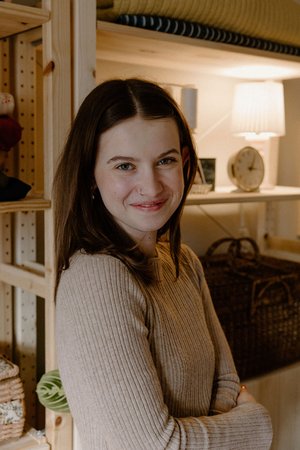
Nat Della Selva