How to Design Digital Sewing Patterns People Actually Want to Buy

Keep reading this post to learn:
How to design quality sewing patterns
What are the exact steps from concept to launch
Why it’s worth the effort
WORKFLOW for Designing QUALITY sewing patterns
In order to have a successful and sustainable sewing pattern business, you need to design patterns that people actually want to buy. The best way to get started is to create and follow a tried and true workflow.
Of course, having a great design idea matters, but a successful sewing pattern is about so much more than the design itself. A sewing pattern worth buying is one that is clear, supportive, and enjoyable to use from start to finish. That means thoughtful drafting, a beautiful fit across the entire size range, clear instructions, helpful illustrations, and an overall experience that makes the customer feel taken care of.
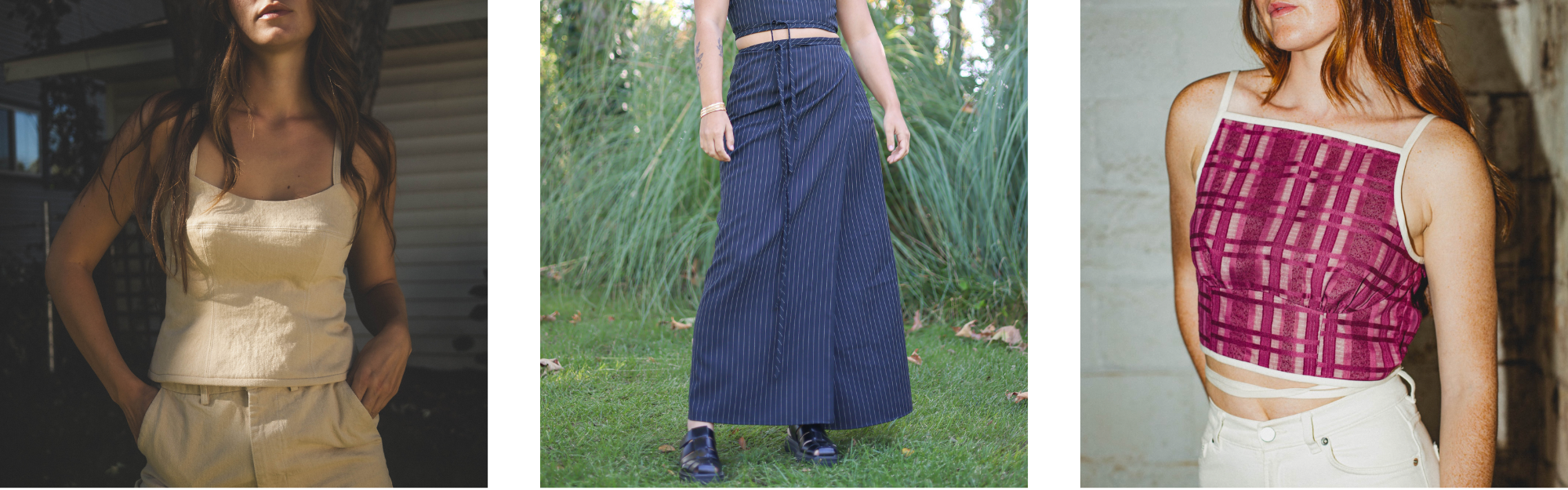
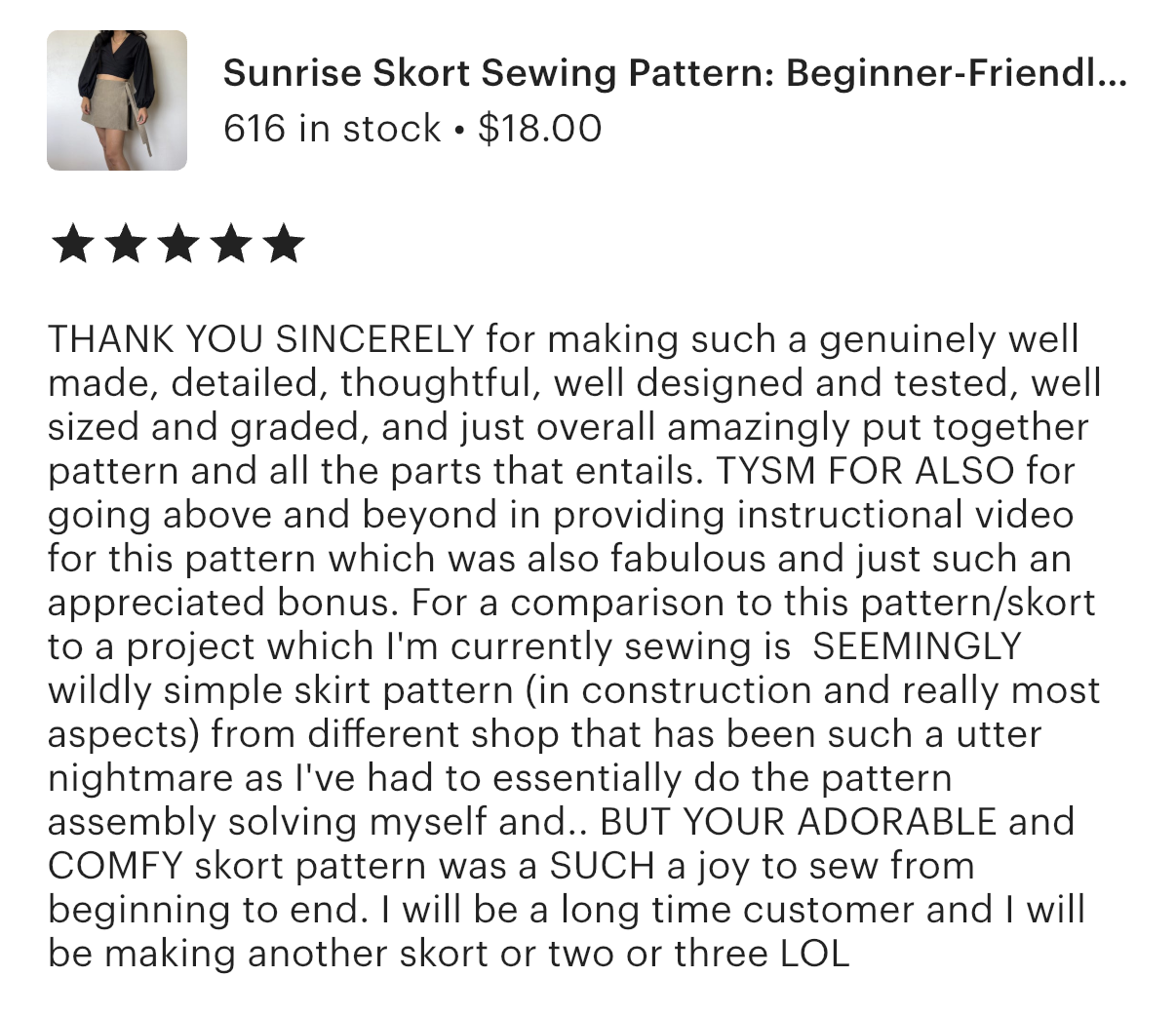
At the end of the day, you’re not just creating a design. You’re creating a product that someone experiences. One that someone is spending their hard earned money on, trusting you to guide them through, and hopefully walking away from feeling proud of. That’s why having a workflow matters so much. It helps you create something beautiful, functional, and worth recommending.
If you want to build a sewing pattern business, it helps to think like both a designer and a business owner from the very beginning. As a designer, you get to dream up beautiful ideas and bring them to life. As a business owner, you need to think about who the pattern is for, how it will fit into your brand, and whether it’s something people will actually want to buy and use.
The sweet spot is finding a way to combine creativity with strategy. That doesn’t mean you need to suck the fun out of the process. It just means that alongside the excitement of creating something new, you’re also thinking about the customer experience, the marketability of the design, and how this pattern fits into the long term vision for your business.
So here are the three big questions:
Where are you starting?
Where are you going?
And how are you getting there?
Choosing The Design
All great patterns start with an idea, and while I could go on about where to find pattern inspiration, I’m willing to bet that you’re already bursting at the seams with design ideas.
When it comes to your first pattern, simpler is usually smarter. It doesn’t have to be (and should not be) boring, but at the same time, it needs to be something that plays to your strengths, feels exciting to create, and is realistic to bring all the way to market. Your first pattern isn’t just about proving that you can design something beautiful. It’s about learning the full process from idea to launch (and making sure you don’t burn out through the process!).
The goal here is not to pick the most impressive and complex idea you’ve ever thought of. But instead to pick an idea that you can follow through on, finish well, and use to build momentum for the next pattern after that.
Drafting the Pattern
Now, beyond the concept phase, you need to design the pattern pieces. This part of the process is where your idea starts becoming a reality! Depending on your process, that may mean drafting by hand first, drafting digitally, or doing a mix of both.'
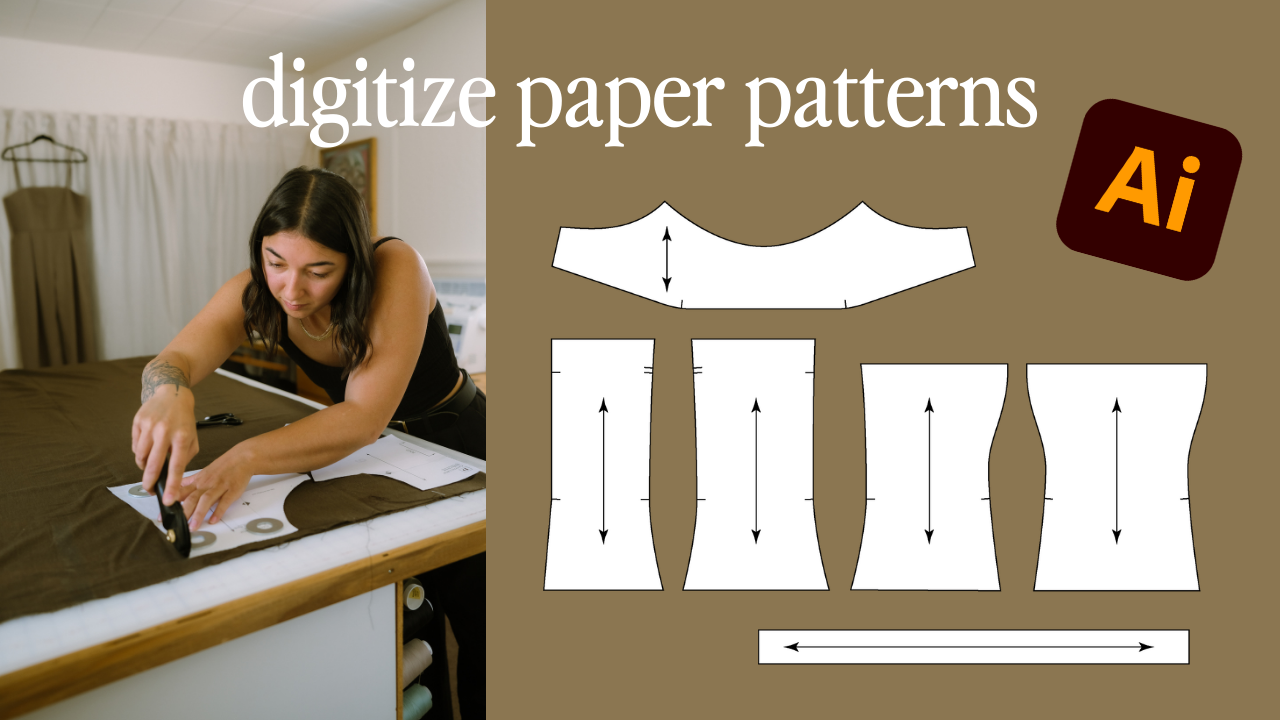
This phase usually includes creating the sample size, sewing it up, testing the fit and design, and making adjustments based on what you learn. If you draft on paper, this is also the point where you’ll want to digitize your pattern so it can eventually become a sellable digital product.
Here’s a step by step tutorial on digitizing your paper pattern pieces in Adobe Illustrator (our preferred patternmaking software!).
Grading the Pattern
After your sample size is digitized and fits as intended, it’s time to get into pattern grading! This process can be outsourced or done by you. If you choose to outsource pattern grading, you’ll want to ensure that you choose the right grader for your project. We highly recommend using CPMG Connect to connect with size inclusive pattern graders.
And if you want to learn pattern grading, here’s a great tutorial to get you started.
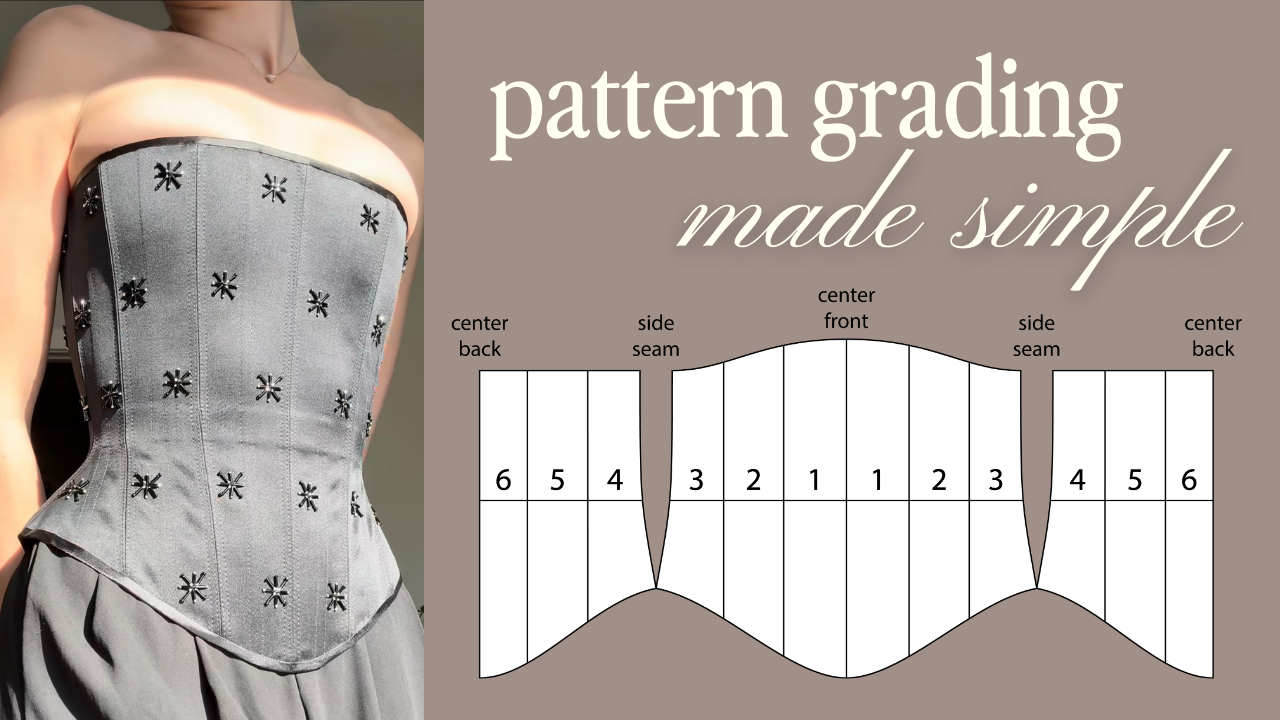
One of the biggest misconceptions about grading is that it’s just a matter of making a pattern bigger or smaller. In reality, pattern grading is much more thoughtful than that. It’s the process of scaling a pattern into a full size range while maintaining the intended fit, proportions, and design details accurately.
Grading directly affects the customer experience. When grading is done well, more customers will have a successful experience with your pattern, which is exactly what we want! Whether you decide to outsource this step or learn it yourself, it’s one of the most important parts of creating a high quality and size inclusive sewing pattern.
Writing the Instructions & Fit Testing
After that, a few steps can be worked on simultaneously: writing instructions, creating illustrations, and fit testing. I can’t stress enough how important the fit testing process is. Fit testing and pattern testing often get lumped together, but they serve two very different purposes. Fit testing is all about refining the actual fit of the garment. This is where you study what needs adjusting in the design, shape, proportions, and balance of the pattern before it’s ready for a wider audience.
Pattern testing happens later. It’s about testing the full pattern experience. Testers can help you catch things like confusing instructions, unclear illustrations, file issues, construction questions, and anything else that might affect how easy the pattern is to follow.
So to recap, here are the workflow topics…
Pattern Concept
Patternmaking
Pattern Grading
Fit Testing
Instruction Writing
Creating Illustrations
Pattern Testing
Marketing
Pattern Launch
The amount of time each step takes is SO variable! Do you have a full time job? Children? Is the pattern simple or complex? Does the pattern have multiple design options? Are you making a YouTube tutorial? There are so many factors to consider.
Unfortunately, offering a timeline for each step is not straight forward, but you can use the list above to help you create a schedule based on your unique needs and lifestyle.
So what’s next?
After you create your schedule, stick to it! Bring your first pattern all the way to market, then use this roadmap over and over again to build your pattern library.
Here’s the thing: successful sewing pattern businesses aren’t built overnight, but the bigger your pattern library is, the more patterns you’ll sell, and the more sustainable your business will become.
It’s a slow and steady process that can have a big return on investment.
That’s the beauty of a digital patternmaking business. You get to put all the time, love, and care up front to create high quality sewing patterns, and then you can reap the benefits forever and ever.
If this process feels a little daunting, we get it. There’s a lot of steps involved and each step is important for the greater picture and customer experience. You’re learning how to take an idea, turn it into a well fitting pattern, grade it into an inclusive size range, and prepare it to become a product that people can actually buy and use. That’s a lot to navigate on your own, especially when you’re still building confidence.
This is exactly why having mentors can make such a big difference. Support can help you move faster, avoid unnecessary mistakes, and keep going when you feel stuck or second-guess yourself.
Inside Confident Patternmaking and Grading, students don’t just get access to lessons. They also get support through our community group and live calls, so they can ask questions, get feedback, and learn alongside other aspiring patternmakers. It’s such a powerful way to build skills and confidence with guidance every step of the way.
If this sounds like the life-giving business of your dreams, you’re in the right place. Inside Confident Patternmaking and Grading, we teach you all the skills you need to draft your dream designs and grade them into an inclusive size range.

If you’re already patternmaking or self drafting, Pattern to Market is your step by step program to create a successful, sustainable sewing pattern business, one high quality sewing pattern at a time.


Jessica Capalbo


You may also like ⬇️